RAW INGREDIENT
🛒 Buy 4 Save 20% – Mix & Match
Average UK Delivery Time: 1-3 Days
✈️ Free UK Delivery – Orders Over 25 GBP
📦 9.95 GBP Next Day Delivery (Orders before 12 noon)



Original price was: £9.99.£5.99Current price is: £5.99.
RAW INGREDIENT
🛒 Buy 4 Save 20% – Mix & Match
Average UK Delivery Time: 1-3 Days
✈️ Free UK Delivery – Orders Over 25 GBP
📦 9.95 GBP Next Day Delivery (Orders before 12 noon)
8 in stock
Lemon balm is the dried leaf of Melissa officinalis, a mint-family herb that smells of lemon without any citrus in it. The genus name is the Greek word for honeybee, and it was planted beside hives for two thousand years before anyone put it in a teapot.
A soft, rounded infusion — lemony, faintly floral, with none of the acidity real lemon brings. Air-dried, 100% stalk free, chopped, ground, sieved and triple filtered.
A bushy perennial herb in the Lamiaceae family — the mint family, alongside basil, rosemary, sage, oregano, thyme and lavender. It grows 60 to 90cm in a clump of much-branched stems that go slightly woody at the base with age, with soft, crinkled, deeply veined leaves.
Like every mint relative it has square stems. Roll one between your fingers and you can feel the four edges — the quickest field identification there is for this family.
The genus is small: five species of perennial herbs. Melissa officinalis is the one anyone grows.
Melissa is Greek for honeybee, and the naming is not decorative. The Greeks called it melisphylla, the bee plant, and believed that as long as lemon balm grew near a hive the bees would never abandon it.
Beekeepers acted on that belief for centuries. In first-century Rome it was used to encourage bees back to their hives, and colonists later carried it to North America partly for the same purpose. The small pale flowers are genuinely rich in nectar, so the practice had something behind it.
The second half of the name is just as informative: officinalis marks a plant that was kept in the officina, the storeroom of a monastery or apothecary. It is the botanical equivalent of a plant with a job.
Native to south-central Europe, the Mediterranean basin, North Africa, western Asia and Iran. It has naturalised widely across temperate and subtropical regions, and it is hardy, unfussy and vigorous — it will grow in poor soil and spread if left alone.
It is the European member of this range, and the one most likely to already be growing in a British garden.
Citral and citronellal, the two dominant compounds in its essential oil. Citral is the same aldehyde that gives lemongrass its character, which is why the two smell like relatives despite being a grass and a mint.
Two other compounds shape it: geraniol, which is rose-scented, and linalool, which is lavender-scented. That is why lemon balm reads as floral rather than sharp. It is, as one writer put it, more the idea of lemon than the thing itself.
Mild — and we would rather say so than have you find out.
Lemon balm is delicate fresh and more delicate dried. Growers describe it as a so-so culinary herb for exactly this reason, and note that most recipes calling for lemon balm also call for lemon juice. If you are expecting the punch of lemongrass or the acidity of a lemon, this is not that.
What it is instead is gentle, rounded and floral, with a softness that makes it a better base than a lead. That mildness is the reason it blends well with almost everything.
| Botanical name | Melissa officinalis |
| Also known as | Melissa, sweet balm, bee balm, honey plant |
| Family | Lamiaceae (mint family) |
| Part used | Leaf, 100% stalk free |
| Processing | Air dried, chopped, ground, sieved, triple filtered |
| Net weight | 15g |
| Yield | 12–15 cups, herbs reusable 2–4 times |
| Aroma compounds | Citral, citronellal, geraniol, linalool |
| Flavour | Mild lemon, floral, no acidity |
| Ingredients | Pure loose leaf herbal tea. Lemon balm only. |
| On pack | Batch ID, picked date, best before date |
| Packed by | Seller Republic Limited (Vibrant Health XYZ), UK — general food business product or raw material |
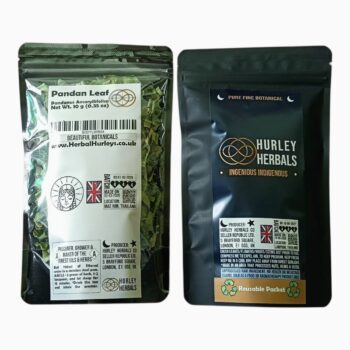
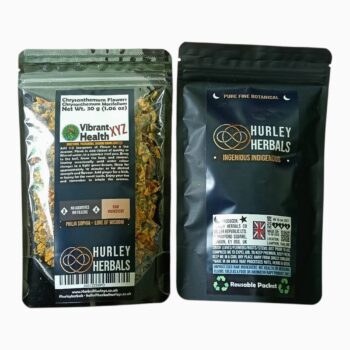
| Packaging | Vacuum sealed, reusable |
Tea House method, as supplied: add 1–2 tablespoons of herbs to 1 litre of water in a stainless steel pan. Bring to a boil and simmer for 5–10 minutes according to taste preference. The colour will deepen as it steeps. The herbs may be reused 2–4 times over the following 2 days, with flavour varying between brews.
1 heaped teaspoon per 250ml, water off the boil rather than at a rolling boil, 5 minutes. Cover it while it steeps — citral and citronellal are volatile, and an uncovered cup loses aroma into the room rather than into you.
Because it is mild, lemon balm is one of the few herbs where a second teaspoon genuinely improves the cup rather than making it bitter. There is very little tannin here, so it will not turn harsh.
3 teaspoons in 500ml of cold water overnight in the fridge, then strained. Cold brewing preserves the delicate top notes that hot water drives off, and for a herb this fragile it is arguably the better method.
As a lemon-scented herb, in dishes where you want the aroma without the acid.
Lemon balm loses more in drying than most herbs, and it is better to say so than to pretend otherwise.
| Fresh leaf | Dried leaf (this) | |
|---|---|---|
| Aroma | Bright lemon on crushing | Softer, more floral, less immediate |
| Quantity | A generous handful per pot | 1–2 heaped teaspoons per 250ml |
| Best method | Steep briefly, covered | Steep 5 minutes covered, or cold brew |
| Cooking | Chopped raw into fruit or salad | Steeped into cream, syrup or vinegar and strained |
| Availability | Garden or greengrocer, seasonal | All year |
| Shelf life | Days | Months, if kept airtight and dark |
The practical consequence is simple: use more of it, and keep the lid on. Citral and citronellal are volatile, so an uncovered cup loses the best of it to the room. And because there is almost no tannin, doubling the dose strengthens the cup without making it harsh — which is not true of most leaves.
Because the plant was in the monastery garden in the first place. The species name officinalis marks a plant kept in the officina, the storeroom of a monastery or apothecary — and monasteries were where European distilling knowledge sat for centuries.
The upper leaves and flowers are steam-distilled to extract the flavour, which goes into absinthe, vermouth and herbal liqueurs. It is suspected to be one of the secret ingredients in both Chartreuse and Bénédictine, though neither will confirm what is in them.
The best-documented case is Carmelite Water, made by Carmelite nuns in the 17th century: lemon peel, lemon balm, nutmeg, coriander and angelica root. If you want to understand what lemon balm contributes, that recipe is the clearest statement of it — the lemon peel brings the sharpness, the balm brings the floral rounding underneath.
Its mildness makes it a joiner. It lifts without competing.
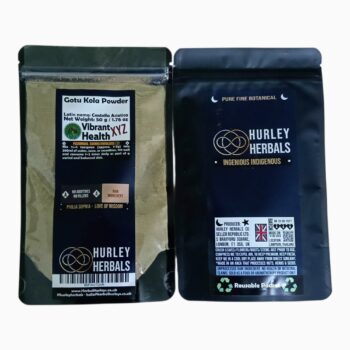
Ingredients: Lemon balm leaf (Melissa officinalis). Single ingredient. Nothing added.
Allergens: This product contains none of the 14 allergens that must be declared under UK law — celery, cereals containing gluten, crustaceans, eggs, fish, lupin, milk, molluscs, mustard, peanuts, sesame, soybeans, sulphur dioxide and sulphites, and tree nuts.
We publish this before you buy because we have to. Under Article 14 of assimilated Regulation (EU) 1169/2011, food sold at a distance must carry the same mandatory information as food bought in a shop, available free of charge before the purchase is concluded and again at delivery.
Nutrition declaration: Not required for this product. Annex V of assimilated Regulation (EU) 1169/2011 exempts all forms of tea and herbal infusions containing no added ingredients that would change nutritional value.
We value the rich heritage of herbal traditions that spans centuries. Our interest in herbs is informed by both historical practices and modern understanding of botanicals.
We source our ingredients from carefully selected suppliers who follow sustainable harvesting and cultivation practices. Our production methods are designed to preserve the natural qualities of our herbs through vacuum sealing and gentle processing techniques that maintain freshness and flavour integrity.
Our packaging is designed to be reused. Simply wash thoroughly after use.
Herb stocks are rotated annually to ensure freshness. Please note packaging may vary as we update our product range.
Store in a cool, dry place away from direct sunlight. Best before: see base of package. Airtight matters here more than with most leaves, because the aroma compounds are volatile and lemon balm loses scent faster than sturdier herbs. Crush a pinch before you brew — if there is no lemon on your fingers, there will be none in the cup.
Does lemon balm taste of lemon?
Of lemon aroma, not lemon acidity. It is mild, floral and rounded. If you want sharpness, add lemon juice — most traditional recipes do exactly that.
Why is it called Melissa?
Melissa is Greek for honeybee. The Greeks called it the bee plant and believed bees would never abandon a hive with lemon balm growing near it. Beekeepers planted it for that reason for centuries.
Is lemon balm a mint?
It is in the mint family, Lamiaceae, alongside basil, rosemary, sage and lavender. Like all of them it has square stems, which you can feel by rolling one between your fingers.
How much should I use per cup?
One heaped teaspoon per 250ml, or two if you want it fuller. Lemon balm has very little tannin, so a stronger brew does not turn bitter.
Should I cover the cup while it steeps?
Yes. The aroma compounds are volatile and an uncovered cup loses them to the room.
Can I cold brew it?
Yes, and arguably you should. Three teaspoons in 500ml of cold water overnight preserves the delicate top notes hot water drives off.
Is it used in liqueurs?
Yes. It appears in absinthe, vermouth and monastic liqueurs, and is suspected to be among the secret ingredients of Chartreuse and Bénédictine.
Does it contain allergens?
No. None of the 14 allergens that must be declared under UK law. Single ingredient, nothing added.
Last updated: 8 September 2026.
Botanical and phytochemical data cross-checked against the Herb Society of America, published essential-oil analyses and horticultural records.
Raw ingredient. Packaging may vary. All herbs are marked with Batch ID, Picked Date and Best Before Date. No health claims made. Information on this website is for educational purposes only and is not intended as medical advice.
| Weight | 20 g |
|---|---|
| Dimensions | 12.4 × 20.2 × 2 cm |
| Colour | n/a |
| Herbal Extraction | n/a |
| Country of origin | Thailand |
| Ean | B0D5YNZN63 |
| Flavour | Lemon Balm |
| Indigenous herbal use | Good Health |
| Indigenous stone use | n/a |
| Ingredients | Dried Lemon Balm Leaves (Melissa Officinalis) |
| Metal | n/a |
| Semi precious stone | n/a |
| Tribe | n/a |
| Wild essential oil | n/a |
| Weight |
Only logged in customers who have purchased this product may leave a review.


There are no reviews yet.