RAW INGREDIENT
🛒 Buy 4 Save 20% – Mix & Match
Average UK Delivery Time: 1-3 Days
✈️ Free UK Delivery – Orders Over 25 GBP
📦 9.95 GBP Next Day Delivery (Orders before 12 noon)

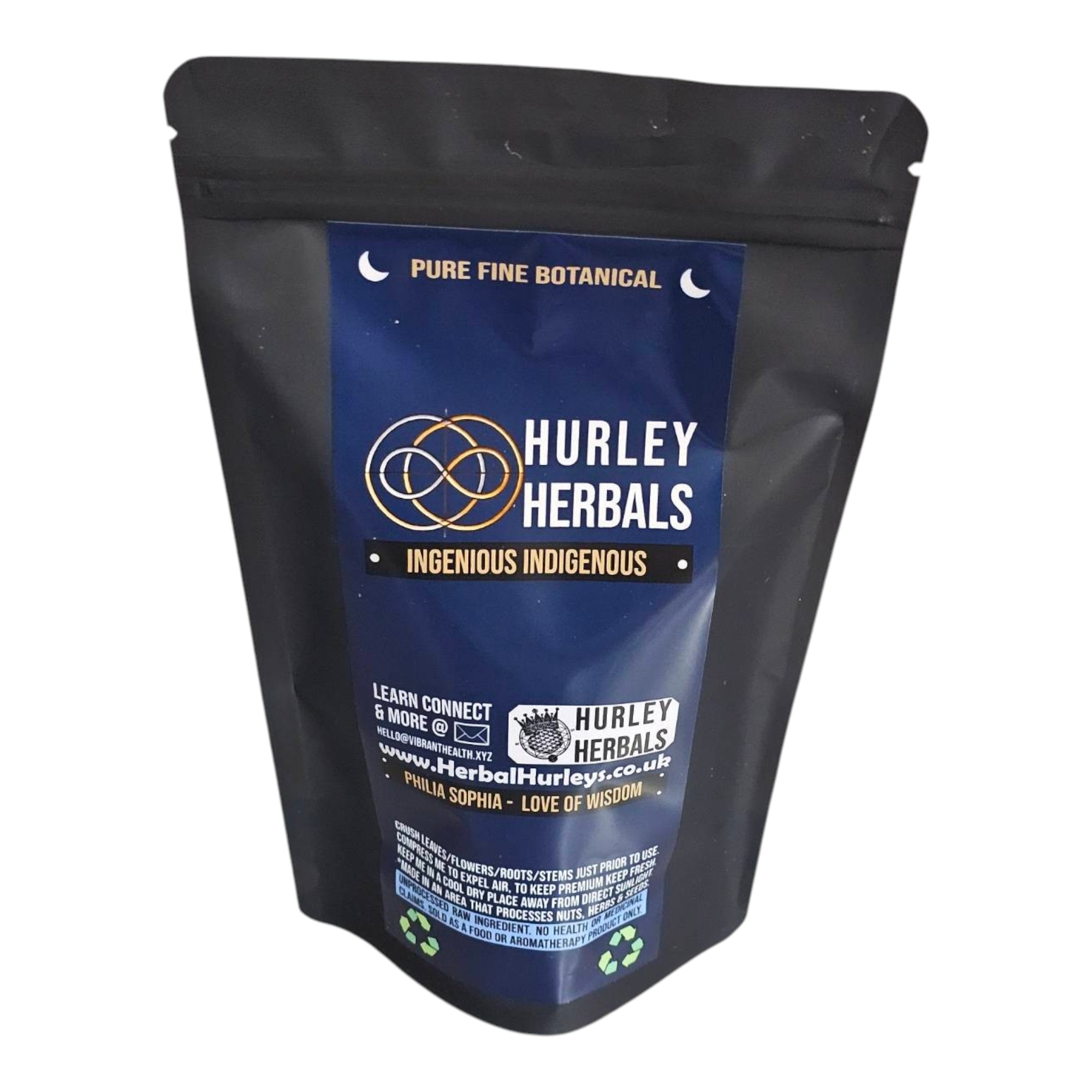


Original price was: £9.99.£5.99Current price is: £5.99.
RAW INGREDIENT
🛒 Buy 4 Save 20% – Mix & Match
Average UK Delivery Time: 1-3 Days
✈️ Free UK Delivery – Orders Over 25 GBP
📦 9.95 GBP Next Day Delivery (Orders before 12 noon)
Out of stock
Horsetail is the dried stem of Equisetum arvense, and it is the oldest thing in this catalogue by a very long way. Its ancestors were tree-sized and 30 metres tall in the Carboniferous, three hundred million years before anything flowered, and the coal in the ground is partly made of them.
What survives is small, jointed, hollow and stiffened with silica. It brews pale and flat — mineral rather than herbal, with almost no aroma. This is not a plant you buy for flavour.
A perennial in the Equisetaceae family, which contains exactly one living genus — Equisetum — and around 18 species. Horsetails are seedless vascular plants, and their closest living relatives are ferns rather than anything you would recognise as a herb.
The stems are its defining feature: jointed and segmented, each segment separated by a node, hollow down the middle with the cavity running a third to two thirds of the stem’s diameter. At every node the sterile stems throw out a whorl of fine needle-like branches, which is where the horsetail shape comes from.
What look like leaves are not doing the work. The leaves are dark, papery and non-photosynthetic, fused into sheaths at the joints. It is the stems and branches that are green.
Older than almost anything else you can buy. The horsetail lineage dates to the Late Devonian, around 380 million years ago, and their fossil relatives dominated Palaeozoic forests.
In the Carboniferous, over 300 million years ago, horsetail relatives of the genus Calamites were trees reaching more than 30 metres. Those forests became the coal measures. Modern horsetails still carry the architecture — hollow, ribbed, jointed stems — that their tree-sized ancestors had.
The name is more recent and more literal: Equisetum from the Latin equus, horse, and saeta, bristle, for the brush-like whorls of branches.
Because it divides the work, and this is what makes E. arvense unusual even among horsetails. The species is dimorphic — it produces two kinds of aerial stem that look nothing alike and do different jobs.
| Fertile stem | Sterile stem (this) | |
|---|---|---|
| When | Early spring | Spring into summer |
| Colour | Pale brown | Green |
| Photosynthesises | No — lacks stomata | Yes |
| Branches | None | Whorls at every node |
| Height | Shorter, 15–25cm | 2–60cm, occasionally to 100cm |
| Carries | A strobilus — the spore cone | Nothing reproductive |
| Lifespan | Ephemeral — withers after spore release | Lasts the season |
The fertile stem is fed through the rhizome by the green ones. It comes up, releases spores, dies back, and the green stems carry the plant through the year. What is in this pack is the sterile green stem, which is the part harvested and dried.
Because people scrubbed pots with it, for centuries, and it worked.
The stems are structurally reinforced with grains of silica — the same material as sand and glass — laid down in the tissue. That gives them an abrasive texture, and horsetail was used to clean cookware and to polish pewter and wood long before wire wool existed. Some regional names record the job directly: pewterwort, scouring rush.
The silica is also why a dried stem snaps cleanly rather than crumbling, and why the material feels faintly gritty between the fingers in a way no dried leaf does.
The strobilus is the cone at the tip of a fertile stem, 1 to 2cm long, light brown and blunt-tipped. It is built from whorls of shield-shaped sporophylls, each carrying five to ten spore sacs on its inner face.
The spores themselves are the remarkable part. Each one carries four elaters — hygroscopic arms that coil and uncoil as humidity changes. Dry air makes them spread; damp air makes them curl. The movement helps the spores work loose and travel, and under a lens a scattering of horsetail spores appears to be slowly writhing.
None of that is in this pack — the fertile stems are gone by the time the green ones are harvested — but it is why the plant persists.
Almost everywhere cold enough. It is native throughout the arctic and temperate regions of the northern hemisphere, including Britain, and grows from sea level to 3,200 metres.
It favours damp, disturbed, open ground: roadsides, riverbanks, fields, marshes, pastures and tundra. It spreads mainly by an extensive rhizome system producing shoots and small fleshy tubers rather than by spores, which is why gardeners find it almost impossible to remove and why agricultural extension services classify it as a problem weed.
| Botanical name | Equisetum arvense |
| Also known as | Field horsetail, common horsetail, scouring rush, bottle brush, pewterwort |
| Family | Equisetaceae — one living genus, ~18 species |
| Part used | Sterile green stem, dried |
| Lineage | Late Devonian, ~380 million years |
| Structural mineral | Silica |
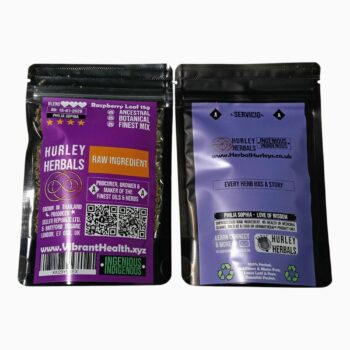
| Net weight | 15g |
| Flavour | Very mild, flat, faintly mineral |
| Ingredients | Horsetail only. Nothing added. |
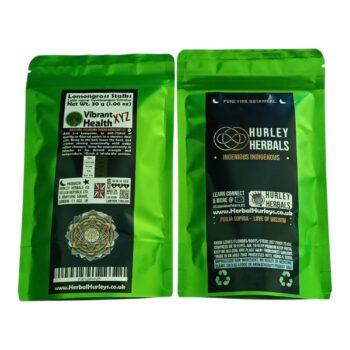
| On pack | Batch ID, picked date, best before date |
| Packed by | Seller Republic Limited (Vibrant Health XYZ), UK — general food business product or raw material |
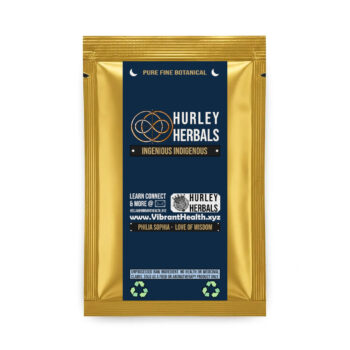
| Packaging | Vacuum sealed, reusable |
Tea House method, as supplied: add 1–2 tablespoons of herbs to 1 litre of water in a stainless steel pan. Bring to a boil and simmer for 5–10 minutes according to taste preference. The colour will deepen as it steeps. The herbs may be reused 2–4 times over the following 2 days, with flavour varying between brews.
Horsetail is a stem, not a leaf, and a silica-stiffened one at that. Pouring hot water over it and waiting gives you very little. It wants sustained heat, the same as bael fruit or a root — 10 minutes at a simmer for a single cup, longer for a pot.
1 heaped teaspoon per 250ml, brought to a simmer and held 10 minutes, then strained through a fine mesh. Coarse strainers let fragments through, and horsetail fragments are gritty in a way leaf fragments are not.
Almost nothing, honestly. Pale, flat and faintly mineral, with none of the aroma a leaf brings. It is the least flavoured thing in this range, and it is almost always blended rather than drunk alone.
Because what you see is a fraction of the plant. Horsetail’s main method of reproduction is not spores at all but an extensive rhizome system running deep underground, producing shoots and small fleshy tubers along its length.
Pull the top growth and the rhizome is untouched. Break the rhizome and each fragment can start again. That is why agricultural extension services list it as a problem weed rather than a wildflower, and why it has survived 380 million years of everything the planet has done since.
It contributes body rather than flavour, so it takes a lead from whatever it is with.
Ingredients: Horsetail (Equisetum arvense). Single ingredient. Nothing added.
Allergens: This product contains none of the 14 allergens that must be declared under UK law — celery, cereals containing gluten, crustaceans, eggs, fish, lupin, milk, molluscs, mustard, peanuts, sesame, soybeans, sulphur dioxide and sulphites, and tree nuts.
We publish this before you buy because we have to. Under Article 14 of assimilated Regulation (EU) 1169/2011, food sold at a distance must carry the same mandatory information as food bought in a shop, available free of charge before the purchase is concluded and again at delivery.
Nutrition declaration: Not required for this product. Annex V of assimilated Regulation (EU) 1169/2011 exempts all forms of tea and herbal infusions containing no added ingredients that would change nutritional value.
We value the rich heritage of herbal traditions that spans centuries. Our interest in herbs is informed by both historical practices and modern understanding of botanicals.
We source our ingredients from carefully selected suppliers who follow sustainable harvesting and cultivation practices. Our production methods are designed to preserve the natural qualities of our herbs through vacuum sealing and gentle processing techniques that maintain freshness and flavour integrity.
Our packaging is designed to be reused. Simply wash thoroughly after use.
Herb stocks are rotated annually to ensure freshness. Please note packaging may vary as we update our product range.
Store in a cool, dry place away from direct sunlight. Best before: see base of package. Dried horsetail is stiff and brittle and will fragment with handling rather than crumble to dust — the silica keeps the pieces sharp-edged. Keep it airtight, and strain finely whatever you brew.
Do you steep horsetail or simmer it?
Simmer. It is a silica-stiffened stem, not a leaf. Hot water poured over it and left to stand gives you very little. Hold it at a simmer for 10 minutes.
What does horsetail taste like?
Almost nothing. Pale, flat and faintly mineral, with no real aroma. It is the least flavoured product in this range and is usually blended.
Why is it called scouring rush?
Because the stems are reinforced with grains of silica, which makes them abrasive. People used horsetail to scrub pots and polish pewter and wood long before wire wool existed.
How old is the horsetail lineage?
It dates to the Late Devonian, around 380 million years ago. In the Carboniferous, relatives of the genus Calamites were trees over 30 metres tall, and those forests became coal.
Which stem is in the pack?
The sterile green stem — the branched, photosynthetic one that lasts the season. The pale brown fertile stems appear in early spring, release spores and wither.
Is horsetail related to ferns?
Yes. Horsetails and ferns are believed to be each other’s closest relatives, based on spore structure and DNA. Horsetails are seedless vascular plants, not flowering plants.
Why does it feel gritty?
Silica in the stem tissue. It is the same mineral as sand and glass, and it is what gives horsetail its structural stiffness and its abrasive texture.
Does it contain allergens?
No. None of the 14 allergens that must be declared under UK law. Single ingredient, nothing added.
Last updated: 8 September 2026.
Botanical data cross-checked against the Friends of the Eloise Butler Wildflower Garden, Flora of North America, Oregon State University horticulture, Michigan State University Extension and the Puget Sound Museum of Natural History.
Raw ingredient. Packaging may vary. All herbs are marked with Batch ID, Picked Date and Best Before Date. No health claims made. Information on this website is for educational purposes only and is not intended as medical advice.
| Weight | 20 g |
|---|---|
| Dimensions | 15 × 2.5 × 22 cm |
| Colour | n/a |
| Herbal Extraction | n/a |
| Country of origin | Thailand |
| Ean | 731199452614 |
| Flavour | Aluminium Ziplock |
| Indigenous herbal use | Good Health |
| Indigenous stone use | n/a |
| Ingredients | Dried Horsetail Herb (Equisetum Species) |
| Metal | n/a |
| Semi precious stone | n/a |
| Tribe | n/a |
| Wild essential oil | n/a |
| Weight |
Only logged in customers who have purchased this product may leave a review.



There are no reviews yet.