PURE RAW FINE BOTANICAL
RAW INGREDIENT
🛒 Buy 4 Save 20% – Mix & Match
Average UK Delivery Time: 1-3 Days
✈️ Free UK Delivery – Orders Over 25 GBP
📦 9.95 GBP Next Day Delivery (Orders before 12 noon)


Original price was: £9.99.£5.99Current price is: £5.99.
RAW INGREDIENT
🛒 Buy 4 Save 20% – Mix & Match
Average UK Delivery Time: 1-3 Days
✈️ Free UK Delivery – Orders Over 25 GBP
📦 9.95 GBP Next Day Delivery (Orders before 12 noon)
31 in stock
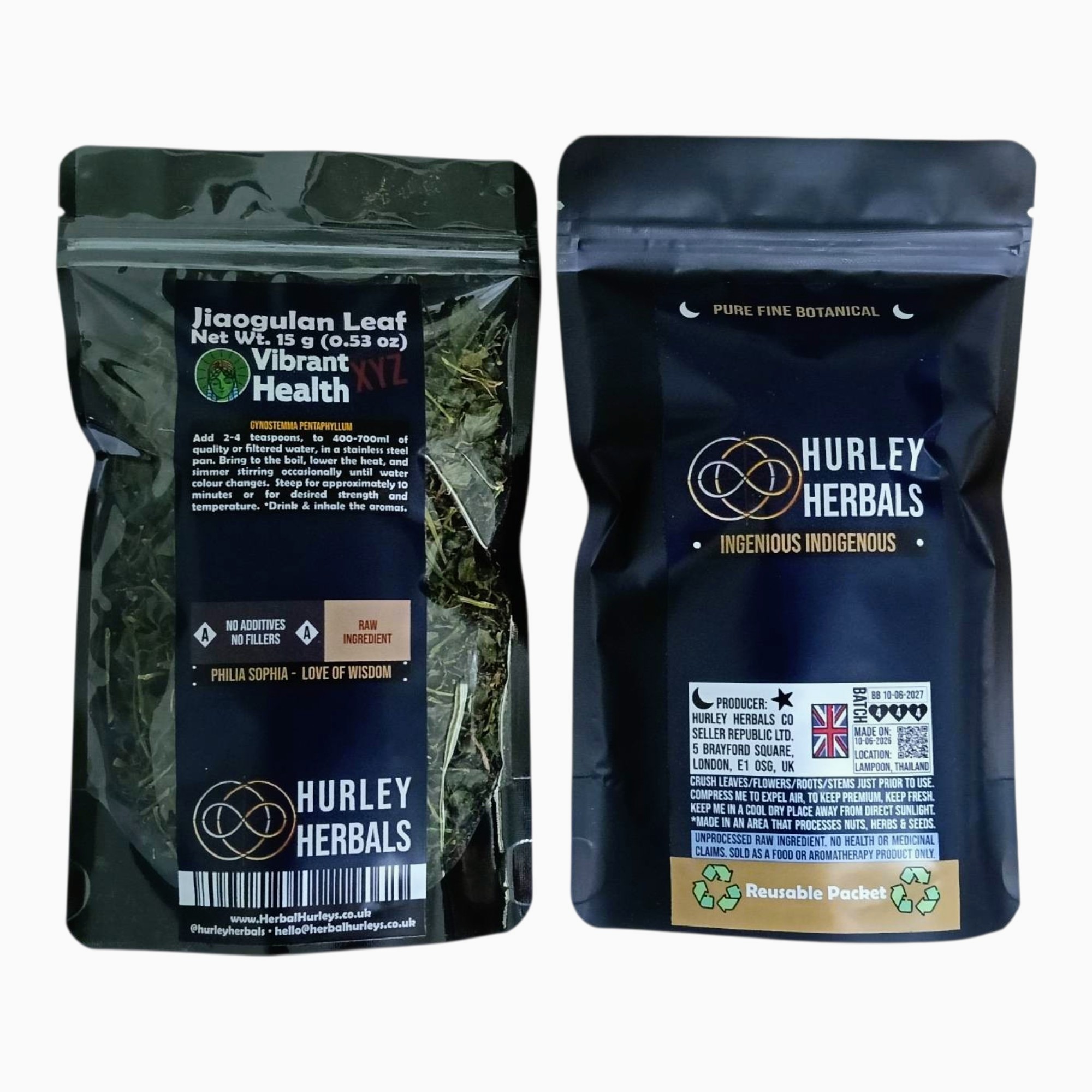
Jiaogulan is the dried leaf of Gynostemma pentaphyllum, a slender climbing vine that grows wild in the mountain forests of southern China. Five leaflets to a leaf, a tendril at every node, and a botanical family that surprises everyone: it is a cucumber relative.
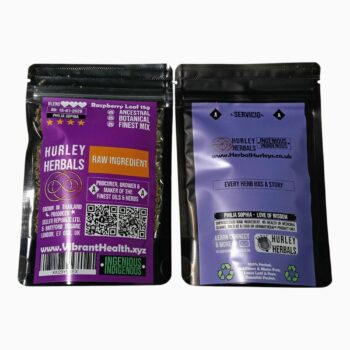
We supply it as a raw botanical — the dried leaf as it comes off the vine, cleaned and graded, with nothing added and nothing done to it.
A perennial climbing vine in the Cucurbitaceae family — the gourd family, alongside cucumber, melon, pumpkin and courgette. That relationship is not obvious from the leaf and it is the first thing worth knowing about the plant.
It climbs by tendrils rather than twining, scrambling over other vegetation rather than standing on its own. The stems are slender, grooved and sparsely hairy, and the whole plant is soft — there is no wood in it anywhere.
For the leaf. Pentaphyllum means five-leaved, and the characteristic leaf is palmately compound with five leaflets radiating from a single point, like fingers from a palm. Some leaves carry seven; five is the norm and the name.
The leaflets are lance-shaped to oval with toothed margins, the central one longest. Held against the light the venation is clear and net-like. It is a distinctive enough arrangement that jiaogulan is difficult to confuse with anything else once you have seen it.
The Chinese name is more evocative: jiaogulan translates as twisting vine orchid, for the way it winds through undergrowth.
Southern China, and outward from there through Japan, Korea, Vietnam, India, Bangladesh, Nepal, Myanmar and Malaysia. Its heartland is the mountain provinces of southern China, and the plant is particularly associated with Guizhou.
It wants shade and moisture. In the wild it grows in thickets, forest margins and damp ravines, generally between about 300 and 3,200 metres, climbing over shrubs and low trees rather than in open ground. It is not a plant of full sun.
That altitude range matters commercially. Material from higher mountain cultivation is generally graded above lowland production, and the two do not look identical — high-grown leaf tends to be smaller, thicker and darker.
Yes, and the family is written all over it once you know what to look for. Cucurbitaceae plants share a set of features: climbing or trailing habit, tendrils arising beside the leaf stalk, soft non-woody stems, and separate male and female flowers.
Jiaogulan has all of them. It is dioecious — male and female flowers occur on separate plants, so a single vine cannot set fruit alone. The flowers themselves are tiny, greenish-white, carried in loose branching panicles, and easy to miss entirely.
The fruit is a small blackish-green berry, a few millimetres across, containing two seeds. Nothing about it suggests a melon, but the architecture underneath is the same.
Because of what the plant produces. Jiaogulan leaf contains gypenosides — a large group of saponin compounds, with well over a hundred distinct ones identified in the plant.
Saponins are surface-active compounds; the name comes from the Latin for soap, and they foam when agitated in water. In jiaogulan they carry the characteristic dual character the plant is known for: an initial sweetness followed by a green bitterness underneath.
A number of gypenosides are structurally similar to the ginsenosides found in ginseng, which is where jiaogulan’s Chinese nickname — southern ginseng, nanfang renshen — comes from. The two plants are botanically unrelated. Ginseng is in the Araliaceae, an entirely different family; the similarity is chemical rather than taxonomic.
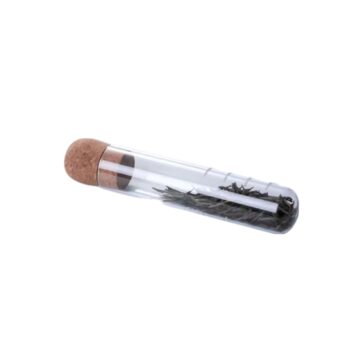
Dark green to olive, thin, and light for its volume. Whole dried leaflets curl as they dry, so the material is loose and airy rather than dense — 15g of jiaogulan takes up considerably more space than 15g of a heavier leaf.
Good material still shows the leaflet shape and the toothed margin. Broken-down, uniformly small fragments indicate either rough handling or a lower grade made from what was left after the whole leaf was sorted out.
Both wild-collected and cultivated, with cultivation now dominant. Propagation is by seed, cutting or division of the running stems, and the vine establishes fast — it is vigorous enough to be treated as a weed in parts of its range.
Leaf is cut through the growing season rather than in a single harvest, which is why the plant suits smallholder production. The vine regrows from the cut, and a stand yields repeatedly rather than being lifted.
After cutting, the leaf is separated from the coarser stem, dried, and graded. Ours is dried naturally and vacuum sealed.
The Japanese name for the same plant — amachazuru, sweet tea vine. Japan is where jiaogulan first drew sustained scientific attention outside China, from the 1970s onward, and a good deal of the early published work on the plant is Japanese rather than Chinese.
The name is descriptive of the leaf’s first impression rather than its whole character. Sweetness arrives first; the bitterness sits behind it.
Saponins. The word comes from the Latin sapo, soap, and saponin-bearing plants have been used as washing agents across the world for exactly that reason — soapwort in Europe, soapnut in India, quillaja in Chile.
Agitate jiaogulan in water and it produces a visible head of fine foam that persists. That is not a fault or a sign of contamination; it is the gypenosides behaving the way saponins behave, and it is one of the simplest ways to confirm the material is what it claims to be.
| Whole dried leaf (this) | Cut and sifted | Powder | Extract | |
|---|---|---|---|---|
| Appearance | Recognisable leaflets | Uniform small pieces | Fine green powder | Brown granules or liquid |
| Identifiable by eye | Yes | Partly | No | No |
| Stem content | Minimal | Often higher | Unknowable | N/A |
| Gypenoside content | As the plant produces it | Same, diluted by stem | Same | Concentrated by processing |
| Processing | Dried only | Dried and milled | Dried and finely milled | Solvent or water extracted |
Whole leaf is the least processed form and the only one you can verify by looking at it. That is the argument for it — not that it is stronger, but that you can see what you have.
| Jiaogulan | Ginseng | |
|---|---|---|
| Binomial | Gynostemma pentaphyllum | Panax ginseng |
| Family | Cucurbitaceae (gourds) | Araliaceae (ivy family) |
| Habit | Climbing vine | Low perennial herb |
| Part used | Leaf | Root |
| Saponins | Gypenosides | Ginsenosides |
| Relationship | Structural similarity between some saponins. No botanical relationship whatsoever. | |
“Southern ginseng” is a nickname earned by chemistry, not by kinship. Anyone telling you jiaogulan is a kind of ginseng is wrong about the plant.
Because a plant under stress makes more of its defensive chemistry. Higher-altitude jiaogulan grows through colder nights, stronger light and a shorter season, and the leaf it produces is physically different — smaller, thicker, darker, and denser in the hand than lowland material.
That is why Chinese trade grading distinguishes mountain-grown from lowland production, and why the two are not priced the same. Whether it matters to you depends on what you want the material for, but it is a real distinction rather than marketing.
| Botanical name | Gynostemma pentaphyllum |
| Also known as | Jiaogulan, southern ginseng, twisting vine orchid |
| Family | Cucurbitaceae (gourd family) |
| Part used | Leaf |
| Form | Whole dried leaf |
| Leaflets | Typically five, occasionally seven |
| Characteristic compounds | Gypenosides (saponins) |
| Origin | Thailand |
| Processing | Naturally dried, graded, vacuum sealed |
| Net weight | 15g |
| Ingredients | Jiaogulan leaf. Nothing added. |
| Supplied as | Raw botanical material |
| On pack | Batch ID, picked date, best before date |
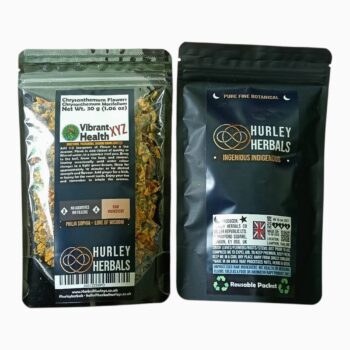
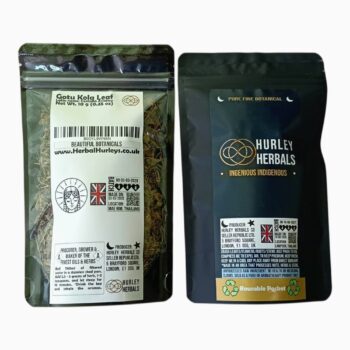
| Packaging | Vacuum sealed, reusable |
This is a raw botanical. It is supplied as dried plant material, and no preparation instructions are given on this page.
Because it is not supplied as a food, no allergen declaration or nutrition information is provided — those requirements attach to food, and this is raw material.
Recorded rather than recommended, and worth setting out because the record is unusual.
Jiaogulan appears in Chinese herbal literature comparatively late for a Chinese plant. It is documented in the Ming dynasty Materia Medica for Famine of 1406, compiled to catalogue plants people could turn to when crops failed — a famine food rather than a herbal at that point.
Its wider reputation came much later, and from statistics rather than tradition. Twentieth-century Chinese population surveys noted unusual longevity in parts of Guizhou province where the vine grows and is habitually gathered, and research interest followed. Japanese scientists took it up in the 1970s under the name amachazuru, sweet tea vine.
That is the documented history. We make no claims about it, and none of it is a reason to consume anything.
Cool, dry, dark and airtight. Best before: see base of package. The leaf is thin and light, so it takes on atmospheric moisture readily and goes limp rather than snapping when it does. Dark storage matters for a green leaf — daylight bleaches it toward khaki over months.
What family is jiaogulan in?
Cucurbitaceae, the gourd family — the same family as cucumber, melon, pumpkin and courgette. It climbs by tendrils and has separate male and female plants, both family traits.
Why is it called five-leaf?
Pentaphyllum means five-leaved. The characteristic leaf is palmately compound with five leaflets radiating from one point. Some carry seven.
Is jiaogulan a kind of ginseng?
No. Ginseng is Panax ginseng in the Araliaceae family. Jiaogulan is a cucumber relative. The nickname southern ginseng comes from structural similarity between some of its gypenoside saponins and ginseng’s ginsenosides, not from any botanical relationship.
What are gypenosides?
The saponin compounds characteristic of the plant, with well over a hundred identified. Saponins are surface-active and foam when agitated in water, and in jiaogulan they carry the sweet-then-bitter character the leaf is known for.
Where does it grow?
Southern China and outward through Japan, Korea, Vietnam, India, Nepal, Myanmar and Malaysia. It grows in shade and moisture — thickets, forest margins and damp ravines, roughly 300 to 3,200 metres.
How do I tell good leaf from poor?
Good material still shows leaflet shape and the toothed margin. Uniformly small fragments suggest rough handling or a lower grade made from what was left after whole leaf was sorted out.
Why is there no allergen or nutrition information?
Because those requirements attach to food. This product is supplied as raw botanical material.
We value the rich heritage of herbal traditions that spans centuries. Our interest in herbs is informed by both historical practices and modern understanding of botanicals.
We source our ingredients from carefully selected suppliers who follow sustainable harvesting and cultivation practices. Our production methods are designed to preserve the natural qualities of our botanicals through vacuum sealing and gentle processing techniques.
Our packaging is designed to be reused. Simply wash thoroughly after use.
Stocks are rotated annually. Please note packaging may vary as we update our product range.
Last updated: 8 September 2026.
Botanical data cross-checked against published floras and peer-reviewed reviews of Gynostemma pentaphyllum.
Raw botanical material. Packaging may vary. No health claims made. Information on this website is for educational purposes only and is not intended as medical advice.
| Weight | 15 g |
|---|---|
| Dimensions | 12 × 2.5 × 14.8 cm |
| Colour | n/a |
| Herbal Extraction | n/a |
| Country of origin | Thailand |
| Ean | B0CY9DP7ZR |
| Flavour | Jiaogulan |
| Indigenous herbal use | Good Health |
| Indigenous stone use | n/a |
| Ingredients | Dried Jiaogulan Leaves (Gynostemma Pentaphyllum) |
| Metal | n/a |
| Semi precious stone | n/a |
| Tribe | n/a |
| Wild essential oil | n/a |
| Weight |
Only logged in customers who have purchased this product may leave a review.


There are no reviews yet.