RAW INGREDIENT
🛒 Buy 4 Save 20% – Mix & Match
Average UK Delivery Time: 1-3 Days
✈️ Free UK Delivery – Orders Over 25 GBP
📦 9.95 GBP Next Day Delivery (Orders before 12 noon)



Original price was: £9.99.£5.99Current price is: £5.99.
RAW INGREDIENT
🛒 Buy 4 Save 20% – Mix & Match
Average UK Delivery Time: 1-3 Days
✈️ Free UK Delivery – Orders Over 25 GBP
📦 9.95 GBP Next Day Delivery (Orders before 12 noon)
28 in stock
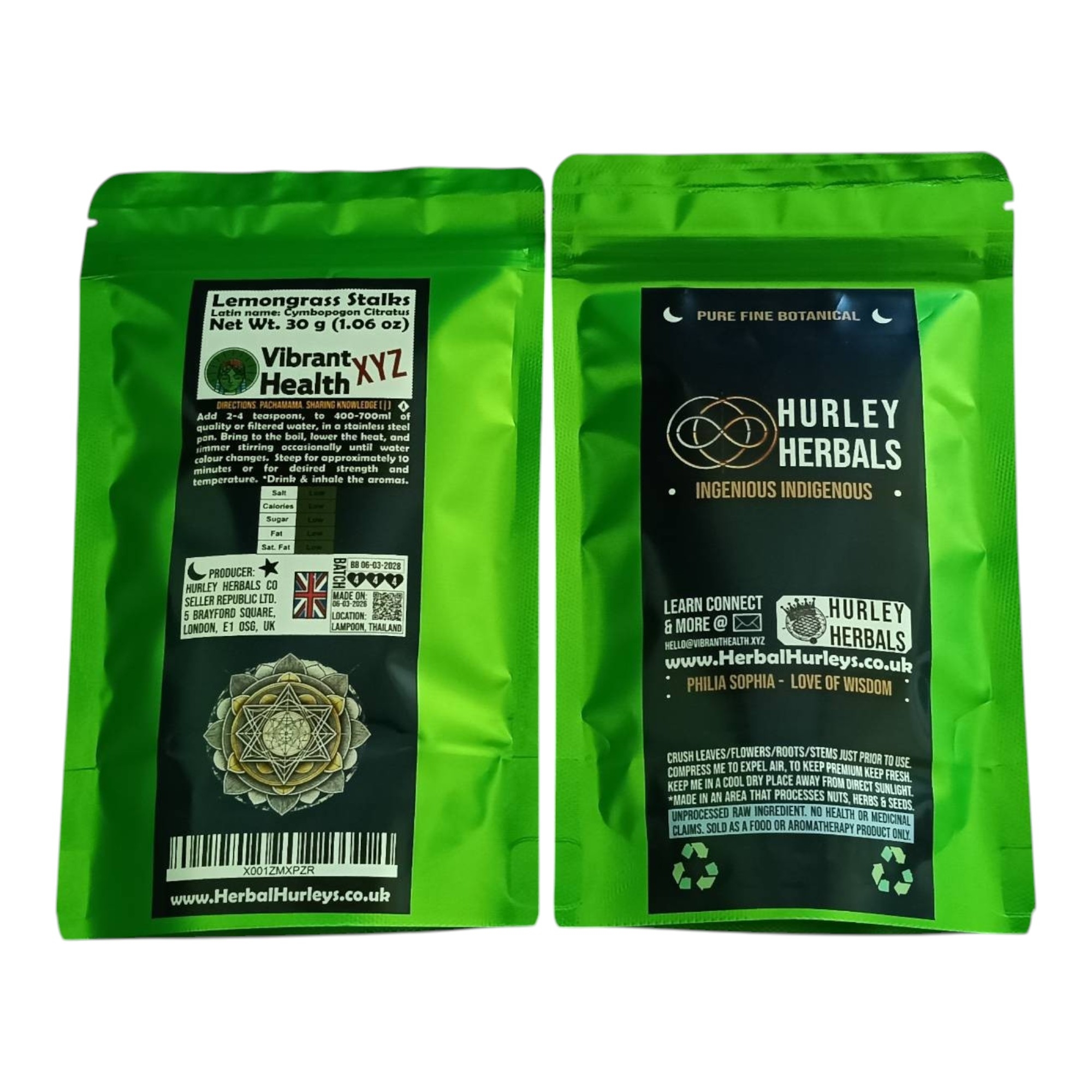
Lemongrass tea cut is dried Cymbopogon citratus leaf and tender stem, chopped short with the woody outer stalk removed, for infusing and cooking. One teaspoon replaces one fresh stalk. This 15g pack brews 12–15 cups and the same leaf reuses two to four times.
Cut the way a Thai kitchen cuts it — short, dense rings that give up their oils in minutes. Most lemongrass sold in the UK is either milled to powder or sold as long woody stalks you pay for and throw away. This is neither.
Cymbopogon citratus is a tall perennial grass in the Poaceae family — the same family as wheat, rice and bamboo. It forms dense tussocks commonly around 1.5 metres tall, throwing up arching blue-green blades up to 90cm long from swollen, tightly wrapped leaf bases. It seldom flowers in cultivation, so growers propagate it by dividing the clump rather than from seed.
Its exact origin is uncertain after millennia of cultivation. The Missouri Botanical Garden gives the native range as southern India and Sri Lanka; Plants For A Future puts it at Sri Lanka or Malaysia. What every source agrees on is stranger: lemongrass is not known in the wild anywhere. Plants For A Future and Useful Tropical Plants both record its habitat as “not known in a wild situation”, and NParks Singapore lists it as found only in cultivation. Like garlic, it is a plant that now exists because people kept growing it.
It grows best where daytime temperatures sit between 24 and 30°C, and tolerates 18 to 34°C. Below about 10°C it dies — this is a frost-tender plant with no cold season anywhere in its range. Plants For A Future records it growing at elevations up to 1,400 metres, though it performs best below 500, in full sun on moist, well-drained soil.
In Thailand it grows in the open on smallholdings and along field margins, often at the edge of a plot where it doubles as a windbreak.
The aroma comes from citral, the essential oil compound that gives the plant its scent and its species name — citratus means “resembling Citrus“. It concentrates in the swollen leaf bases and tender inner stem, which is why those are the culinary parts and the dry outer blade is not.
The genus name is worth knowing too. Cymbopogon is Greek kymbe (boat) and pogon (beard), for the boat-shaped flower spathes and hairy spikelets of the genus.
A crop is first cut at around 120 to 240 days old, then harvested repeatedly from the same clump. Stems are cut at the base while actively growing, then trimmed of the tough outer sheath and dry blade tips. What remains — leaf and tender stem — goes on to be dried.
That repeat-harvest habit is why lemongrass suits smallholder cultivation. It is a standing crop, not an annual replant, and a clump keeps producing for years.
Ours is grown in Thailand, sourced from small local farmers using traditional growing methods. It is air dried, then chopped, ground, sieved and triple filtered — the stage that removes the woody stalk and the dust, and the reason this cut infuses clear rather than cloudy. Vacuum sealed and gently processed to preserve freshness and flavour integrity. Stocks rotated annually.
| Botanical name | Cymbopogon citratus |
| Family | Poaceae (true grasses) |
| Part used | Leaf and tender stem, 100% stalk free |
| Origin | Thailand |
| Cultivation | Small local farms, traditional methods |
| Processing | Air dried, chopped, ground, sieved, triple filtered |
| Net weight | 15g |
| Yield | 12–15 cups, herbs reusable 2–4 times |
| Aroma | Bright citrus, light ginger, dry grass base |
| Ingredients | Pure loose leaf herbal tea. Lemongrass only. |
| On pack | Batch ID, picked date, best before date |
| Packed by | Seller Republic Limited (Vibrant Health XYZ), UK — general food business product or raw material |
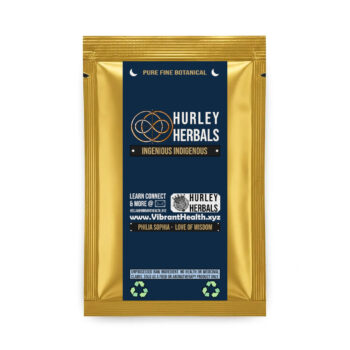
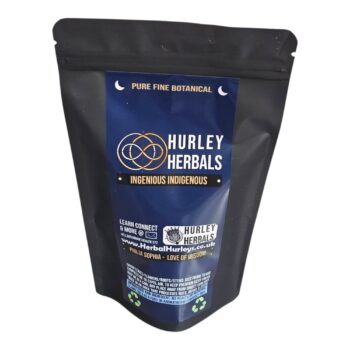
| Packaging | Vacuum sealed, reusable |
Tea House method, as supplied: add 1–2 tablespoons to 1 litre of water in a stainless steel pan. Bring to a boil and simmer for 5–10 minutes according to taste. The colour deepens as it steeps. The herbs may be reused 2–4 times over the following 2 days, with flavour varying between brews.
The first brew is brightest, the later ones rounder and grassier. Lemongrass is one of the few infusions that will not turn bitter on a long simmer, so timing is preference rather than rule.
1 heaped teaspoon per 250ml, water straight off the boil, 5 minutes for a light cup and 8 for a full one. Resteep the same leaf.
Yes. 2 teaspoons in 500ml of cold water, refrigerated overnight, then strained. Cleaner and rounder than a hot brew cooled down. Keeps three days refrigerated.
Brew at double strength and pour over a full glass of ice. Lime at the end, not the beginning.
Dried lemongrass behaves differently from fresh. There is no fibre to bruise and no stalk to smash, so it releases faster and goes in later than a fresh stem would.
1 teaspoon per litre replaces one fresh stalk. Add it for the last 10 minutes — the volatile oils cook off if it goes in at the start. Strain before serving, or leave it in; the cut is fine enough to eat around.
For pounding into a paste the ratio changes, because you want body as well as aroma: rehydrate 1 tablespoon (3 teaspoons) in 2 tablespoons of hot water for 10 minutes, then pound or blitz with the wet ingredients. That replaces one fresh stalk.
1 teaspoon in the water for 2 cups of jasmine rice. Lift the aromatics out before fluffing.
Blitz dry with garlic, white pepper and coriander root into a rub for chicken or pork. A dry cut takes to a dry rub better than fresh ever does.
1 teaspoon dried = 1 fresh stalk for infusing, simmering and stews. That is the standard conversion across cookery sources, and it holds for this cut.
1 tablespoon dried, rehydrated = 1 fresh stalk for pastes and rubs.
Dried suits long-simmered dishes, where it has time to rehydrate and give up its oils. Fresh is brighter in something quick. Lemon zest is not a substitute — zest brings acid, lemongrass does not.
| Fresh stalk | Dried tea cut | |
|---|---|---|
| Equivalent | 1 stalk | 1 tsp infusing / 1 tbsp rehydrated for pastes |
| Preparation | Trim, bruise, smash or slice | None — straight in |
| When to add | Start of the cook | Last 10 minutes |
| Best for | Quick dishes, whole aromatic then lifted out | Long simmers, teas, rubs, syrups, infusions |
| Flavour | Brighter, greener | Rounder, more concentrated by weight |
| Waste | Woody outer stalk discarded | None — 100% usable |
| Storage | Refrigerated, around 2 weeks | Cool dry cupboard, see best before date |
| Works in oil or syrup? | Not safely at room temperature | Yes — low moisture |
Neither is better across the board. Fresh wins on a quick stir-fry. Dried wins on anything that simmers, anything infused, and anything you want to keep in the cupboard rather than watch wilt in the fridge.
The useful thing about a dry cut is that it goes into preparations a fresh stalk cannot.
Ingredients: Lemongrass (Cymbopogon citratus). Single ingredient. Nothing added.
Allergens: This product contains none of the 14 allergens that must be declared under UK law — celery, cereals containing gluten, crustaceans, eggs, fish, lupin, milk, molluscs, mustard, peanuts, sesame, soybeans, sulphur dioxide and sulphites, and tree nuts.
We publish this before you buy because we have to. Under Article 14 of assimilated Regulation (EU) 1169/2011, food sold at a distance must carry the same mandatory information as food bought in a shop, available free of charge before the purchase is concluded and again at delivery.
Nutrition declaration: Not required for this product. Annex V of assimilated Regulation (EU) 1169/2011 exempts herbs and spices, and all forms of tea and herbal infusions containing no added ingredients that would change nutritional value. Lemongrass qualifies on both counts, and again as an unprocessed single-ingredient product.
We value the rich heritage of herbal traditions that spans centuries. Our interest in herbs is informed by both historical practices and modern understanding of botanicals.
We source our ingredients from carefully selected suppliers who follow sustainable harvesting and cultivation practices. Our production methods are designed to preserve the natural qualities of our herbs through vacuum sealing and gentle processing techniques that maintain freshness and flavour integrity.
Our packaging is designed to be reused. Simply wash thoroughly after use.
Herb stocks are rotated annually to ensure freshness. Please note packaging may vary as we update our product range.
Store in a cool, dry place away from direct sunlight. Best before: see base of package. Kept airtight and dark, dried lemongrass holds its aroma well — if it stops smelling of citrus when you open it, it will not taste of it either.
How many cups does 15g make?
Twelve to fifteen at one teaspoon per cup, and the same herbs can be reused two to four times over the following two days. Using the litre method, one to two tablespoons makes a full pot.
Is this the same as lemongrass powder?
No. Powder is milled to a flour and clouds the water. This is a tea cut — visible pieces of leaf and tender stem that infuse clear and strain cleanly.
What is a Thai tea cut?
A short cut with the woody outer stalk removed — how lemongrass is prepared for infusion in Thailand, rather than sold whole as stalks on a market stall.
Can I use dried lemongrass instead of fresh stalks?
Yes. One teaspoon of dried lemongrass replaces one fresh stalk for infusing, simmering and stews. For pastes and rubs, rehydrate one tablespoon in hot water to replace one stalk.
Where does lemongrass grow?
Cymbopogon citratus most likely originated in southern India, Sri Lanka and maritime Southeast Asia, but it is not known in the wild anywhere and exists only in cultivation. It grows best at 24–30°C in full sun on moist, well-drained soil, and dies below about 10°C.
Does it contain anything besides lemongrass?
No. One ingredient. No additives, preservatives, flavourings or artificial content.
Does it contain allergens?
No. It contains none of the 14 allergens that must be declared under UK law.
How long does it keep?
Each pack carries a best before date on the base, alongside the batch ID and picked date. Store cool, dry and out of direct sunlight.
Written by Julian Arden, Herbal Hurleys. We have sourced raw botanicals direct from growers in Thailand and Colombia for over a decade.
Last updated: 8 September 2026.
Botanical data cross-checked against Missouri Botanical Garden, Plants For A Future, NParks Singapore Flora&FaunaWeb and Useful Tropical Plants.
Raw ingredient. Packaging may vary. All herbs are marked with Batch ID, Picked Date and Best Before Date. No health claims made. Information on this website is for educational purposes only and is not intended as medical advice.
| Weight | 20 g |
|---|---|
| Dimensions | 12 × 2.5 × 14.8 cm |
| Colour | n/a |
| Herbal Extraction | n/a |
| Country of origin | Thailand |
| Ean | 731199451778 |
| Flavour | Lemongrass |
| Indigenous herbal use | Good Health |
| Indigenous stone use | n/a |
| Ingredients | Dried Thai Lemongrass (Cymbopogon Citratus) |
| Metal | n/a |
| Semi precious stone | n/a |
| Tribe | n/a |
| Wild essential oil | n/a |
| Weight |
Only logged in customers who have purchased this product may leave a review.


There are no reviews yet.