RAW INGREDIENT
🛒 Buy 4 Save 20% – Mix & Match
Average UK Delivery Time: 1-3 Days
✈️ Free UK Delivery – Orders Over 25 GBP
📦 9.95 GBP Next Day Delivery (Orders before 12 noon)




Original price was: £9.99.£5.99Current price is: £5.99.
RAW INGREDIENT
🛒 Buy 4 Save 20% – Mix & Match
Average UK Delivery Time: 1-3 Days
✈️ Free UK Delivery – Orders Over 25 GBP
📦 9.95 GBP Next Day Delivery (Orders before 12 noon)
4 in stock
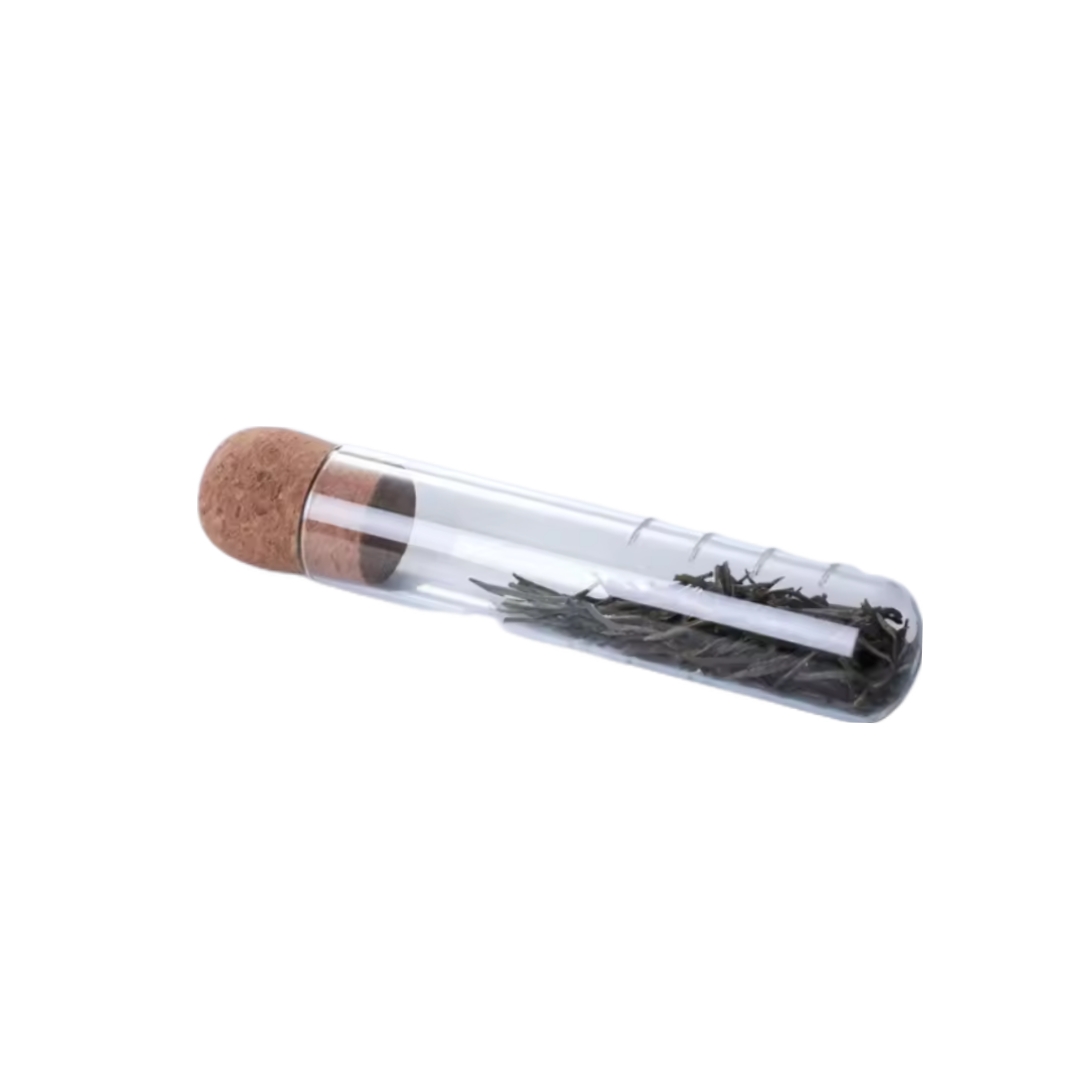
A borosilicate glass strainer for loose leaf tea. Heat-resistant, taste-neutral and dishwasher safe, with nothing between the leaf and the water but glass.
Most strainers are stainless mesh or plastic. Both work. Both also do something to the cup that glass does not, and if you are brewing single-origin loose leaf that is the reason to bother with this one.
No plastic, no chemicals. Just glass.
Glass with boron trioxide in the mix rather than the soda and lime used in ordinary glassware. That single change alters how it behaves under heat.
Ordinary soda-lime glass expands appreciably when it warms. Pour boiling water into a cold soda-lime tumbler and the inside expands while the outside has not caught up, the stress concentrates, and it cracks. Borosilicate expands far less for the same temperature change, so the stress never builds to that point.
That property is why borosilicate is the standard for laboratory glassware, and why it is the right material for something that has boiling water poured through it several times a day.
Because it is chemically inert and non-porous. There is no surface for oils to soak into and nothing for the water to leach out.
Metal is different. Stainless steel is durable and easy to clean, but it is a conductor and it is not inert in the way glass is — delicate teas picked up against a metal basket taste subtly flatter to a lot of drinkers. Plastic is worse again: it is porous at a microscopic level, it holds oils, and a plastic infuser used for a strong smoky tea will still smell of it a fortnight later.
Glass holds nothing. Rinse it and it is neutral again, which is what you want if you brew chrysanthemum on Monday and lemongrass on Tuesday.
| Borosilicate glass | Stainless mesh | Plastic | |
|---|---|---|---|
| Affects flavour | No — inert | Slightly, on delicate teas | Yes, retains and transfers |
| Retains odour | No | Minimal | Yes |
| Heat handling | Designed for it | Excellent | Varies; can deform |
| You can see the brew | Yes | No | Sometimes |
| Durability | Breakable if dropped | Very high | High |
| Cleaning | Rinse or dishwasher | Mesh traps fines | Stains over time |
| Best for | Single-origin and delicate leaf | Everyday robust brewing | Convenience |
Stainless is the sensible everyday choice and we are not going to pretend otherwise. Glass earns its place when the tea is worth tasting properly, and when you want to watch it happen.
More than it sounds. Several of the things worth brewing tell you when they are ready by appearance rather than by clock.
Chrysanthemum flowers swell and unfurl in hot water and the liquor turns pale gold; safflower florets loosen and bleed colour out; bael turns deep amber as the sugars come out of the dried fruit. Timing any of those by a five-minute rule is guesswork. Watching them is not.
It also shows you when a leaf is spent. A second or third infusion that stops colouring the water has stopped giving anything else either.
For resteeping, leave the used leaf in the strainer and set it on a saucer rather than emptying it. Most of the loose leaf in this range takes two to four infusions.
Good for: cut and whole leaf, flowers, most tea cuts. Chrysanthemum, lemongrass, kaffir lime, raspberry leaf, pandan, safflower, lemon balm — anything with structure to it.
Less good for: powders. Moringa, tamarind and gotu kola powders are milled fine and will pass straight through any strainer, glass or otherwise. Powders are blended into liquid, not infused.
Worth knowing: very fine cuts and the dust at the bottom of a pack will get through to some degree. That is true of every strainer with holes in it, and it settles harmlessly.
Dishwasher safe, and rinsing under a hot tap does the job for most brews. Three things worth knowing:
| Material | Borosilicate glass |
| Construction | No metal, no plastic components |
| Heat | Heat-resistant — suitable for boiling water |
| Dishwasher safe | Yes |
| Reusable | Yes |
| Weight | Lightweight, travel-friendly |
| Origin | Thailand |
| Suits | Loose leaf tea, herbal and flower infusions |
| Not suitable for | Powders |
| Product type | Tea equipment — not a food or a botanical |
| Packaging | Packaging may vary as we update our range |
Because most of what we sell is loose. A cut leaf infuses better than a bag — there is room for the leaf to open and for water to move through it, which is the whole reason loose leaf tastes different from the same tea compressed into paper. But loose leaf needs something to hold it.
This is that, in the least intrusive material available.
We value the rich heritage of herbal traditions that spans centuries. Our interest in herbs is informed by both historical practices and modern understanding of botanicals.
We source our ingredients from carefully selected suppliers who follow sustainable harvesting and cultivation practices. Our production methods are designed to preserve the natural qualities of our herbs through vacuum sealing and gentle processing techniques.
Our packaging is designed to be reused. Simply wash thoroughly after use.
Please note packaging may vary as we update our product range.
What is borosilicate glass?
Glass made with boron trioxide instead of the soda and lime in ordinary glassware. It expands far less when heated, so it resists the thermal stress that cracks a normal tumbler when boiling water hits it. It is the standard material for laboratory glass.
Does a glass strainer really taste different from metal?
On delicate teas, many drinkers say yes. Glass is chemically inert and non-porous, so nothing leaches out and nothing soaks in. Stainless is excellent but is not inert in the same way.
Is it dishwasher safe?
Yes. Rinsing under a hot tap is usually enough, and immediately after use is easiest.
Can I use it for powders?
No. Moringa, tamarind and gotu kola powders are milled fine and pass straight through any strainer. Powders are blended into liquid rather than infused.
Will it crack with boiling water?
It is made for boiling water. What no glass likes is a sudden swing the other way — let it cool before it goes under a cold tap.
How do I get tea stains out?
Soak in warm water with bicarbonate of soda. Do not use abrasives; they scratch glass and scratches are where stains take hold.
Can I resteep with it?
Yes. Leave the used leaf in the strainer on a saucer between infusions. Most loose leaf in this range takes two to four.
Does it contain plastic?
No. No plastic and no metal components.
Last updated: 8 September 2026.
Tea equipment. Packaging may vary. This product is not a food or a botanical, and no allergen or nutrition information applies to it.
| Colour | n/a |
|---|---|
| Herbal Extraction | n/a |
| Country of origin | Thailand |
| Ean | (See packet) |
| Flavour | Tea Strainer |
| Indigenous herbal use | Good Health |
| Indigenous stone use | n/a |
| Ingredients | n/a |
| Metal | n/a |
| Semi precious stone | n/a |
| Tribe | n/a |
| Wild essential oil | n/a |
| Weight |
Only logged in customers who have purchased this product may leave a review.


There are no reviews yet.