RAW INGREDIENT
🛒 Buy 4 Save 20% – Mix & Match
Average UK Delivery Time: 1-3 Days
✈️ Free UK Delivery – Orders Over 25 GBP
📦 9.95 GBP Next Day Delivery (Orders before 12 noon)






Original price was: £9.99.£5.99Current price is: £5.99.
RAW INGREDIENT
🛒 Buy 4 Save 20% – Mix & Match
Average UK Delivery Time: 1-3 Days
✈️ Free UK Delivery – Orders Over 25 GBP
📦 9.95 GBP Next Day Delivery (Orders before 12 noon)
7 in stock
Passion flower is the dried aerial parts of Passiflora incarnata, known in its native America as the maypop. It brews mild and faintly hay-like — closer to dried grass than to anything floral, which surprises people expecting the flower to taste the way it looks.
And it does look extraordinary. Of more than 500 species in the genus, almost all of them tropical, this is the outlier that survives a hard winter in Pennsylvania.
A fast-growing herbaceous perennial vine in the Passifloraceae family, climbing by tightly coiled tendrils and reaching 6 to 8 feet in a season, sometimes far more where it has something to climb. Leaves are alternate and palmately three-lobed, occasionally five, 6 to 15cm long and slightly leathery.
The flower is the reason anyone notices it: two and a half to three inches across, with ten bluish-white tepals, a prominent white stigma and five stamens, and between them a corona — a fringe of fine white and purple filaments radiating out like a halo. Nothing else in a temperate hedgerow looks remotely like it.
Two explanations and both are true. The green, egg-shaped fruits pop audibly when stepped on. And the plant dies back to the ground every winter, then may pop up again from its underground rhizomes in spring — which is exactly what it does.
It carries a shelf of other names for the same reasons: purple passionflower, true passionflower, wild apricot, wild passion vine.
The southeastern and central United States — not South America, which is where most of the genus lives. Its range runs from southern New Jersey, Delaware and Maryland through Ohio and Oklahoma, south to southern Florida and southern Texas.
It colonises open, disturbed ground: roadsides, fencerows, thickets, fields, riverbanks, railway margins. It wants full sun and tolerates drought, and it spreads by root suckers into dense patches where conditions suit it.
It is also genuinely hardy. Missouri Botanical Garden gives it USDA zones 5 to 9, and Plants For A Future rates the roots hardy to around −20°C even though top growth is killed by frost. That combination — tropical-looking flower, temperate constitution — is why it is the passion flower you see growing outdoors in Britain.
Because it is self-sterile, and the plant goes to considerable lengths to stay that way.
Maypop flowers need cross-pollination to set fruit. The species is also andromonoecious: on any one plant, some flowers are fully functional and others are functionally male, either because their stigmas are held up out of an insect’s path or because the female parts have not developed. The plant adjusts the ratio through the season according to how much fruit it has already set and how much light it is getting.
The pollinators it relies on are large. Carpenter bees and bumblebees do most of the work — eastern carpenter bees, Xylocopa virginica, are so attached to the flowers that they have been recorded sleeping overnight underneath the anthers.
Bribery. There are two conspicuous glands at the base of each leaf blade that secrete drops of sweet nectar, and more beneath the flower buds. These are extrafloral nectaries — nectar produced outside the flower, offering nothing to a pollinator.
They pay ants. Ants take the nectar and, in doing so, patrol the plant and deter the caterpillars that would otherwise strip it. The vine is the larval host for Gulf Fritillary, Zebra Longwing and several other butterflies, so it has a real problem to manage.
| Botanical name | Passiflora incarnata |
| Also known as | Maypop, purple passionflower, wild apricot, wild passion vine |
| Family | Passifloraceae |
| Part used | Flower and aerial parts, dried |
| Native range | Southeastern and central United States |
| Hardiness | USDA 5–9; roots to around −20°C |
| Processing | Naturally dried |
| Net weight | 15g |
| Flavour | Mild, hay-like, faintly green |
| Ingredients | Passion flower only. Nothing added. |
| On pack | Batch ID, picked date, best before date |
| Packed by | Seller Republic Limited (Vibrant Health XYZ), UK — general food business product or raw material |
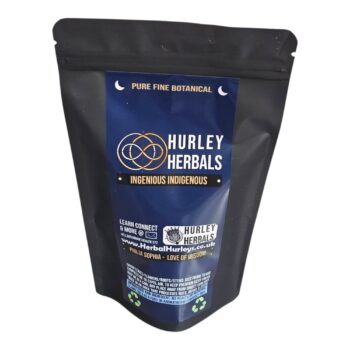
| Packaging | Vacuum sealed, reusable |
Tea House method, as supplied: add 1–2 tablespoons of herbs to 1 litre of water in a stainless steel pan. Bring to a boil and simmer for 5–10 minutes according to taste preference. The colour will deepen as it steeps. The herbs may be reused 2–4 times over the following 2 days, with flavour varying between brews.
1 heaped teaspoon per 250ml, water off the boil, 5 to 8 minutes. It brews a pale straw-gold. The flavour is quiet and slightly hay-like — there is very little tannin, so a longer steep makes it fuller rather than harsher.
Yes. 2 teaspoons in 500ml of cold water overnight, then strained. Cold brewing brings out a cleaner, greener character. Keeps three days refrigerated.
This is the second surprise after the appearance. Passion fruit flavour comes from the fruit of Passiflora edulis, a different species. The dried aerial parts of the maypop taste of dried plant, not of tropical fruit, and nothing you do in the pot will change that.
| Passiflora incarnata (this) | Passiflora edulis | |
|---|---|---|
| Common name | Maypop | Passion fruit |
| Native to | Southeastern USA | South America |
| Hardiness | USDA 5–9, dies back and returns | Tender, needs a frost-free climate |
| Grown for | Flowers and aerial parts | Fruit |
| Fruit | Yellowish-green, egg-shaped, edible pulp | Purple or yellow, the one in the shops |
| In the cup | Mild, hay-like | Not used as an infusion |
The names get used interchangeably online and they are not interchangeable plants. Anything sold as passion flower for infusion should say incarnata on it.
The aerial parts — flower, leaf and the thinner stem material, harvested together and dried. That is the traditional harvest for this species, taken after some of the berries have matured and then dried for later use.
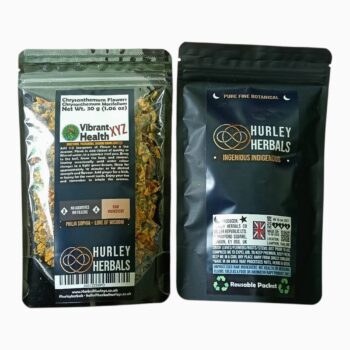
It is not the fruit, and it is not the root. A pack of dried maypop looks like a mixture rather than a single uniform thing, because it is one: pale dried petals, three-lobed leaf fragments, and short lengths of tendril and stem. If yours looks like nothing but flowers, it has been picked over for appearance rather than harvested conventionally.
Its mildness makes it a base rather than a lead.
Because it is built for large, heavy insects. The corona filaments give a carpenter bee something to grip, and the anthers and stigma are positioned above it so that a bee working the nectar has pollen pressed onto its back and then wiped onto the next flower’s stigma. Small insects walk underneath the whole apparatus and achieve nothing.
Sixteenth-century Spanish missionaries in South America read the same structure symbolically, seeing the corona as a crown of thorns and the five stamens and three styles as wounds and nails — which is where the name passion flower comes from. It has nothing to do with passion in the ordinary sense.
Ingredients: Passion flower (Passiflora incarnata). Single ingredient. Nothing added.
Allergens: This product contains none of the 14 allergens that must be declared under UK law — celery, cereals containing gluten, crustaceans, eggs, fish, lupin, milk, molluscs, mustard, peanuts, sesame, soybeans, sulphur dioxide and sulphites, and tree nuts.
We publish this before you buy because we have to. Under Article 14 of assimilated Regulation (EU) 1169/2011, food sold at a distance must carry the same mandatory information as food bought in a shop, available free of charge before the purchase is concluded and again at delivery.
Nutrition declaration: Not required for this product. Annex V of assimilated Regulation (EU) 1169/2011 exempts all forms of tea and herbal infusions containing no added ingredients that would change nutritional value.
We value the rich heritage of herbal traditions that spans centuries. Our interest in herbs is informed by both historical practices and modern understanding of botanicals.
We source our ingredients from carefully selected suppliers who follow sustainable harvesting and cultivation practices. Our production methods are designed to preserve the natural qualities of our herbs through vacuum sealing and gentle processing techniques that maintain freshness and flavour integrity.
Our packaging is designed to be reused. Simply wash thoroughly after use.
Herb stocks are rotated annually to ensure freshness. Please note packaging may vary as we update our product range.
Store in a cool, dry place away from direct sunlight. Best before: see base of package. Dried aerial parts are brittle and will break down into smaller fragments with handling — that is cosmetic rather than a fault, though a finer strainer helps. Dark storage keeps what colour the dried flowers hold.
Does passion flower tea taste of passion fruit?
No. Passion fruit flavour comes from the fruit of Passiflora edulis, a different species. This is the dried aerial parts of the maypop, which taste mild and faintly hay-like.
Why is it called maypop?
Two reasons, both true. The green fruits pop when stepped on, and the plant dies back each winter then may pop up again from its rhizomes in spring.
Where does it grow?
The southeastern and central United States, from New Jersey and Maryland through Ohio and Oklahoma down to Florida and Texas. Most of the genus is tropical; this one is not.
Is it hardy?
Remarkably. Missouri Botanical Garden gives USDA zones 5 to 9, and the roots are rated hardy to about −20°C even though frost kills the top growth.
What is the fringe in the middle of the flower?
The corona — a ring of fine white and purple filaments between the petals and the stamens. It is the feature that makes a passion flower unmistakable.
How much per cup?
One heaped teaspoon per 250ml, water off the boil, five to eight minutes. Very little tannin, so a longer steep makes it fuller rather than bitter.
What are the glands on the leaf stalks?
Extrafloral nectaries. They secrete nectar outside the flower to attract ants, which then patrol the plant and deter the caterpillars that feed on it.
Does it contain allergens?
No. None of the 14 allergens that must be declared under UK law. Single ingredient, nothing added.
Last updated: 8 September 2026.
Botanical data cross-checked against Missouri Botanical Garden, the Flora of the Southeastern United States, Plants For A Future and University of Florida horticultural records.
Raw ingredient. Packaging may vary. All herbs are marked with Batch ID, Picked Date and Best Before Date. No health claims made. Information on this website is for educational purposes only and is not intended as medical advice.
| Weight | 25 g |
|---|---|
| Dimensions | 12 × 20 × 2 cm |
| Colour | n/a |
| Herbal Extraction | n/a |
| Country of origin | Thailand |
| Ean | 680699850119 |
| Flavour | Passion Flower |
| Indigenous herbal use | Good Health |
| Indigenous stone use | n/a |
| Ingredients | Dried Passion Flower (Passiflora Incarnata) |
| Metal | n/a |
| Semi precious stone | n/a |
| Tribe | n/a |
| Wild essential oil | n/a |
| Weight |
Only logged in customers who have purchased this product may leave a review.


There are no reviews yet.