RAW INGREDIENT
🛒 Buy 4 Save 20% – Mix & Match
Average UK Delivery Time: 1-3 Days
✈️ Free UK Delivery – Orders Over 25 GBP
📦 9.95 GBP Next Day Delivery (Orders before 12 noon)

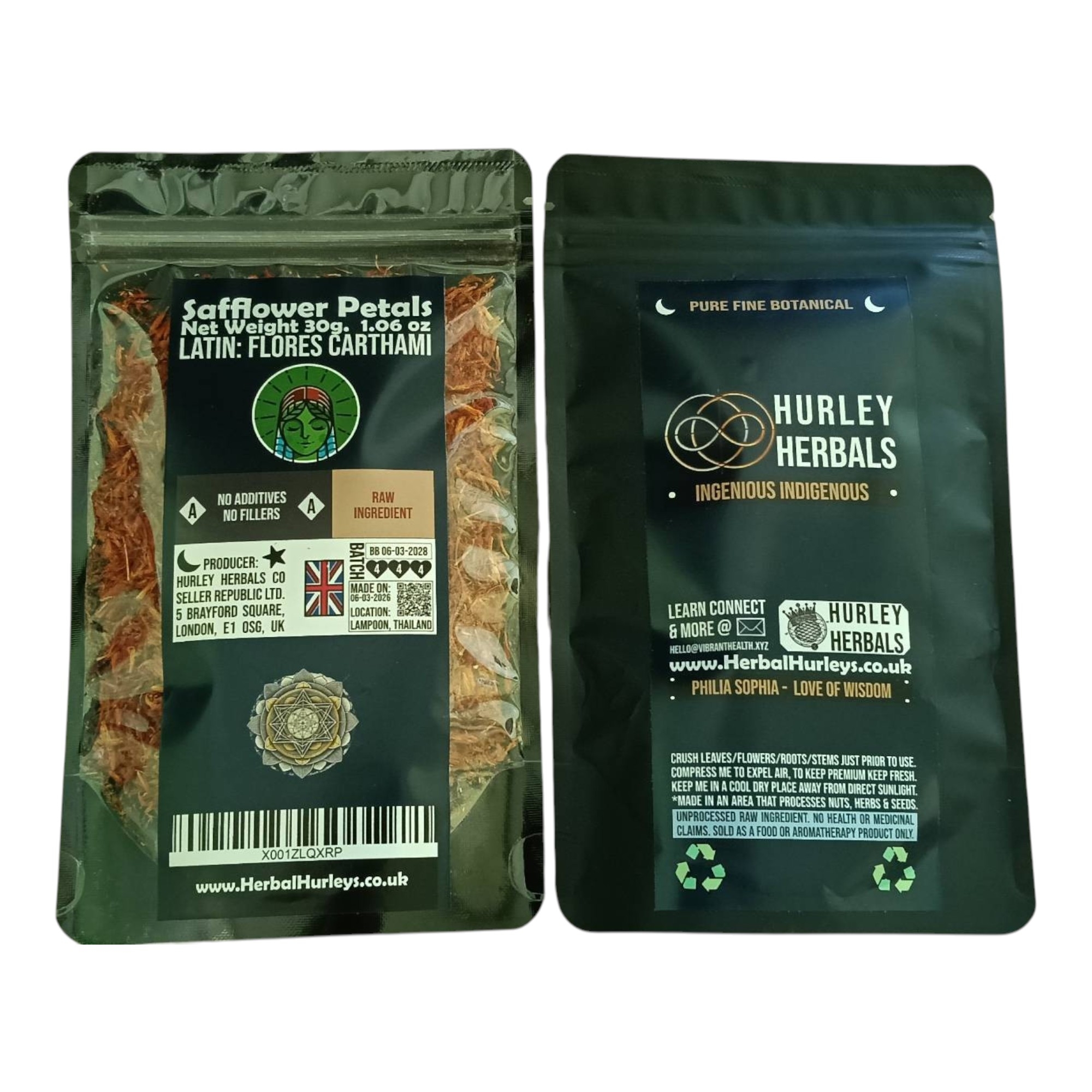
Original price was: £9.99.£5.99Current price is: £5.99.
RAW INGREDIENT
🛒 Buy 4 Save 20% – Mix & Match
Average UK Delivery Time: 1-3 Days
✈️ Free UK Delivery – Orders Over 25 GBP
📦 9.95 GBP Next Day Delivery (Orders before 12 noon)
56 in stock
Safflower tea is the dried florets of Carthamus tinctorius, a thistle grown by people for at least 4,000 years. It brews a clear golden cup, mild and faintly honeyed, and it is one of the oldest crops humanity has.
You may know it as false saffron. The petals were the cheap substitute long before they were a tea — and unlike saffron, they colour without dominating.
A highly branched, thistle-like annual in the Asteraceae family — the daisy family, and specifically the thistle tribe. Plants run 30 to 150cm tall, rising from a leaf rosette into a branched stem, each branch carrying one to five globular flower heads.
Every head holds 15 to 20 seeds, and each head opens into a tuft of narrow florets in yellow, orange or deep red. Those florets are what is in this pack. The plant grows a deep taproot, which is how it survives the arid, seasonally wet places it comes from.
Older than almost anything else you can buy. Safflower is among the world’s oldest crops, cultivated in Mesopotamia with archaeological traces possibly dating to 2500 BC, and domesticated in the Fertile Crescent over 4,000 years ago.
The evidence is unusually vivid. Safflower dye has been identified in ancient Egyptian textiles of the Twelfth Dynasty, 1991 to 1802 BC. Garlands of safflower adorn mummies from the Eighteenth Dynasty, and safflower garlands and fruits were found in the tomb of Tutankhamun.
Outside Egypt, the oldest scientifically authenticated safflower dyes appear on eighth-century Japanese textiles, where the plant is known as benibana.
Because it was used as one, for centuries, and because it looks the part. Dried safflower florets are thread-like and red-orange, and dropped into a pot they tint rice and broth a similar golden colour.
What they do not do is taste like saffron. Real saffron carries safranal and picrocrocin — hay, honey and a distinctive bitterness. Safflower is much milder. The Spanish colonists along the Rio Grande used it as a saffron substitute in traditional recipes, and it still appears in paella, risotto and pasta as a colourant.
Anyone selling you saffron at a safflower price is selling you safflower. The tell is the shape: saffron threads are trumpet-shaped stigmas with a flared end, safflower florets are straight and even.
Because the two pigments behave completely differently in water, and only one of them comes out.
Safflower holds a yellow pigment — water-soluble flavonoids — and a red pigment called carthamin, which is water-insoluble. Cold or hot water pulls the yellow and leaves the red behind. Dyers exploit this: they wash the yellow out with cold water first, then extract the carthamin with a weak alkali.
So a cup of safflower tea is gold. To get red out of these petals you would need a chemistry set.
Scale gives you a sense of how little pigment is actually there: to stain one kilogramme of cotton bright crimson takes the flower heads from up to five hectares of safflower.
| Botanical name | Carthamus tinctorius |
| Also known as | False saffron, bastard saffron, benibana, honghua |
| Family | Asteraceae (daisy family, thistle tribe) |
| Part used | Dried florets |
| Origin | Thailand |
| Cultivation | Small local farms, traditional methods |
| Processing | Naturally dried florets |
| Net weight | 15g |
| Pigments | Yellow flavonoids (water-soluble), carthamin red (insoluble) |
| Flavour | Mild, faintly honeyed, gently vegetal |
| Ingredients | Safflower florets only. Nothing added. |
| On pack | Batch ID, picked date, best before date |
| Packed by | Seller Republic Limited (Vibrant Health XYZ), UK — general food business product or raw material |
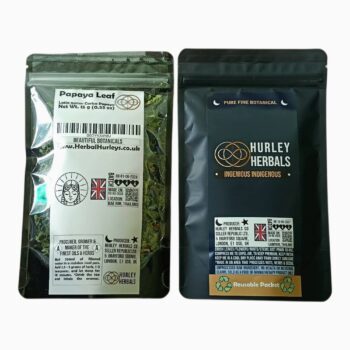
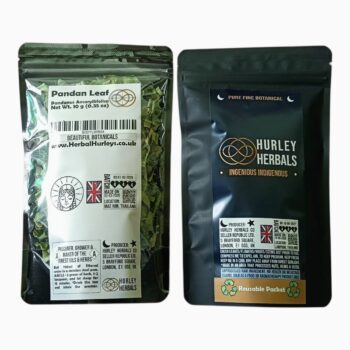
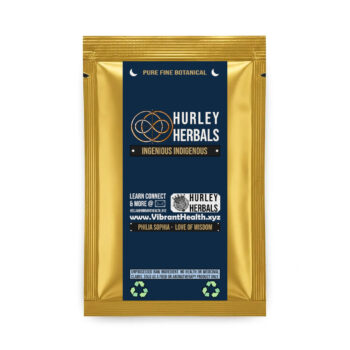
| Packaging | Vacuum sealed, reusable |
Tea House method, as supplied: add 1–2 tablespoons to 1 litre of water in a stainless steel pan. Bring to a boil and simmer for 5–10 minutes according to taste preference. The colour will deepen as it steeps. The florets may be reused 2–4 times over the following 2 days, with flavour varying between brews.
1 teaspoon per 250ml, water off the boil, 4 to 5 minutes. Safflower is delicate — it is a light, clean cup rather than a bold one, and it takes honey unusually well.
Like chrysanthemum, this is a tea worth watching. The dry florets are compressed and dull; in water they loosen, spread and the gold bleeds out of them.
Long steeping does not make safflower stronger, it makes it vegetal. Four to five minutes is the sweet spot. If you want more colour, use more florets rather than more time.
As a colourant first and a flavour second — the reverse of most things in this range.
1 teaspoon per 2 cups of rice, added with the liquid. It tints without the cost of saffron. Do not expect saffron’s flavour; if you want that, use both.
A generous pinch lends a golden cast to a clear stock. Strain it out or leave it — the florets soften completely.
Steep 2 teaspoons in the liquid you are using, strain, then make the dough with the coloured water.
Steep in warm water for 30 minutes and strain. Bear in mind that carthamin is sensitive to acid, alkali, heat and light — the colour you get is the water-soluble yellow, and it is not permanent. Colour things you will eat soon.
| Safflower (this) | Saffron | |
|---|---|---|
| Plant | Carthamus tinctorius, a thistle | Crocus sativus, a crocus |
| Part used | Florets | Stigmas |
| Shape | Straight, even threads | Trumpet-shaped, flared at one end |
| Colour given | Gold | Deep gold to orange |
| Flavour | Mild, faintly honeyed | Hay, honey, distinctly bitter |
| Key compounds | Yellow flavonoids, carthamin | Safranal, picrocrocin, crocin |
| Cost | Pennies per dish | Among the most expensive spices on earth |
| Use it for | Colour, and a light drinking tea | Flavour, where the flavour is the point |
They are not substitutes for each other, whatever the “false saffron” name implies. Safflower gives colour at a fraction of the cost; saffron gives a flavour safflower cannot approach. In a paella you can reasonably use safflower for the colour and a pinch of saffron for the aroma, and get most of both.
Ingredients: Safflower florets (Carthamus tinctorius). Single ingredient. Nothing added.
Allergens: This product contains none of the 14 allergens that must be declared under UK law — celery, cereals containing gluten, crustaceans, eggs, fish, lupin, milk, molluscs, mustard, peanuts, sesame, soybeans, sulphur dioxide and sulphites, and tree nuts.
Safflower is an Asteraceae plant, the same family as ragweed, daisies, marigolds and chrysanthemum. That is not a regulated allergen, but people who react to others in that family sometimes prefer to avoid it. Note also that this is the floret, not the seed — safflower seed oil is a different product entirely.
We publish this before you buy because we have to. Under Article 14 of assimilated Regulation (EU) 1169/2011, food sold at a distance must carry the same mandatory information as food bought in a shop, available free of charge before the purchase is concluded and again at delivery.
Nutrition declaration: Not required for this product. Annex V of assimilated Regulation (EU) 1169/2011 exempts all forms of tea and herbal infusions containing no added ingredients that would change nutritional value.
We value the rich heritage of herbal traditions that spans centuries. Our interest in herbs is informed by both historical practices and modern understanding of botanicals.
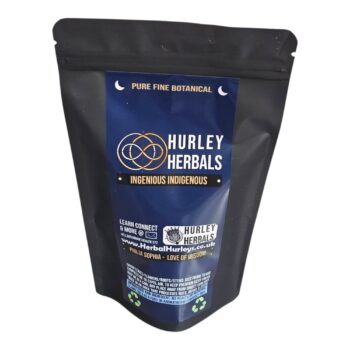
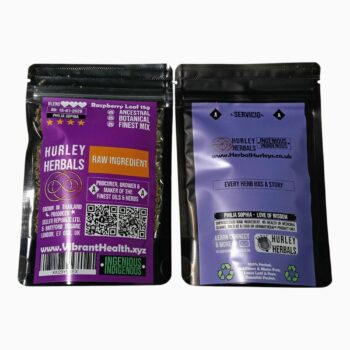
We source our ingredients from carefully selected suppliers who follow sustainable harvesting and cultivation practices. Our production methods are designed to preserve the natural qualities of our herbs through vacuum sealing and gentle processing techniques that maintain freshness and flavour integrity.
Our packaging is designed to be reused. Simply wash thoroughly after use.
Herb stocks are rotated annually to ensure freshness. Please note packaging may vary as we update our product range.
Store in a cool, dry place away from direct sunlight. Best before: see base of package. Dark storage matters more than usual here — the pigments are light-sensitive, and florets kept in a clear jar on a windowsill will fade to straw within months. They still brew, they just look tired.
Is safflower the same as saffron?
No. Safflower is Carthamus tinctorius, a thistle; saffron is the stigma of a crocus. Safflower tints food a similar gold but lacks saffron’s flavour. It has been sold as false saffron for centuries.
How do you tell them apart?
By shape. Saffron threads are trumpet-shaped stigmas with a flared end. Safflower florets are straight and even along their length.
Why is safflower tea yellow when the petals are red?
The red pigment, carthamin, is water-insoluble and stays in the petal. Only the water-soluble yellow flavonoids come out. Dyers remove the yellow with cold water before extracting the red with alkali.
How long should I steep it?
Four to five minutes. Longer does not make it stronger, it makes it vegetal. Use more florets rather than more time.
Can I use it instead of saffron in paella?
For colour, yes — about 1 teaspoon per 2 cups of rice. For flavour, no. Use both if you want both.
How old is safflower as a crop?
Among the oldest known. Cultivated in Mesopotamia with traces possibly dating to 2500 BC. Safflower dye appears in Egyptian textiles from 1991–1802 BC, and garlands were found in Tutankhamun’s tomb.
Is this the same as safflower oil?
No. Safflower oil is pressed from the seeds and is flavourless and colourless. This is the floret.
Does it contain allergens?
No. None of the 14 allergens that must be declared under UK law. It is an Asteraceae plant, the same family as ragweed and daisies.
Last updated: 8 September 2026.
Botanical, historical and pigment data cross-checked against Royal Botanic Gardens Kew, University of Oxford Plants 400, the Museum of Fine Arts Boston CAMEO database and GBIF.
Raw ingredient. Packaging may vary. All herbs are marked with Batch ID, Picked Date and Best Before Date. No health claims made. Information on this website is for educational purposes only and is not intended as medical advice.
| Weight | 30 g |
|---|---|
| Dimensions | 12 × 2.5 × 14.8 cm |
| Colour | n/a |
| Herbal Extraction | n/a |
| Country of origin | Thailand |
| Ean | B0CY9CCVX1 |
| Flavour | Safflower |
| Indigenous herbal use | Good Health |
| Indigenous stone use | n/a |
| Ingredients | Dried Safflower Petals (Carthamus Tinctorius) |
| Metal | n/a |
| Semi precious stone | n/a |
| Tribe | n/a |
| Wild essential oil | n/a |
| Weight |
Only logged in customers who have purchased this product may leave a review.



There are no reviews yet.