RAW INGREDIENT
🛒 Buy 4 Save 20% – Mix & Match
Average UK Delivery Time: 1-3 Days
✈️ Free UK Delivery – Orders Over 25 GBP
📦 9.95 GBP Next Day Delivery (Orders before 12 noon)



Original price was: £9.99.£5.99Current price is: £5.99.
RAW INGREDIENT
🛒 Buy 4 Save 20% – Mix & Match
Average UK Delivery Time: 1-3 Days
✈️ Free UK Delivery – Orders Over 25 GBP
📦 9.95 GBP Next Day Delivery (Orders before 12 noon)
41 in stock
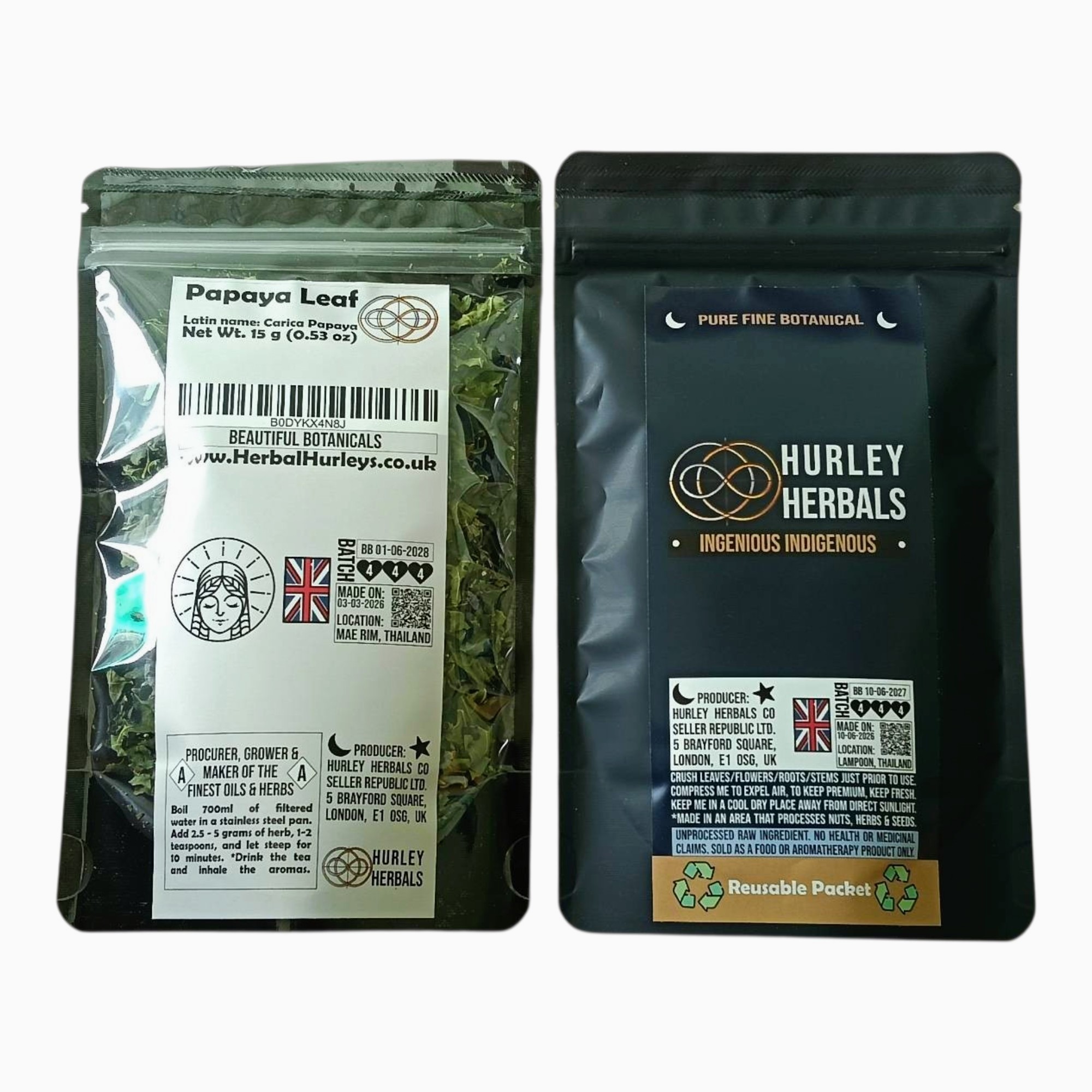
Papaya leaf is the dried, palmately lobed leaf of Carica papaya — distinctly bitter, and used as an infusion rather than a flavouring. It is the bitterest thing in this range, and that is the point: it behaves like a bitter green, not like a tea herb.
The plant it comes from is one of the strangest in the catalogue. Papaya looks like a tree, is treated like a tree, and is not one.
Technically, no. Carica papaya is classified by botanists as a giant herb, because it never produces true woody tissue. What looks like a trunk is a single soft, hollow, unbranched stem covered in the scars of leaves it has already dropped, topped by an umbrella of foliage.
It grows fast and dies young. Papayas can flower within four to eight months of planting, fruit within the first year, and rarely live beyond about five. A mature plant reaches 2 to 10 metres.
Every part of it carries latex — the milky sap that is the commercial source of papain.
Large and dramatic. The blade is roughly circular in outline and deeply palmately divided into seven to eleven lobes, each lobe itself pinnately cut and toothed. Leaves reach 60 to 80cm across, on hollow petioles that can run 40cm to a metre long.
They are arranged spirally at the very top of the stem, which is why a papaya reads as a fountain rather than a canopy. As the plant grows the lower leaves drop, leaving the ringed scars that mark the stem.
The Americas, not Asia — which surprises people who first met it in a Thai salad. It is native to lowland tropical Central America, most likely southern Mexico and neighbouring regions, and may represent the fusion of two or more wild Carica species. The Maya were developing it at least 4,000 years ago.
Spanish explorers carried it to the Caribbean and on to Southeast Asia in the sixteenth century, where it naturalised so completely that it now feels indigenous. It is frost-tender, hardy only to USDA zones 10 to 12, and needs consistent warmth.
All three. Wild papaya is dioecious — male and female flowers on separate plants — and the sexes are indistinguishable until they flower. Males carry their flowers on long drooping racemes; females bear theirs in small clusters or singly, close to the stem.
Cultivation added a third option. Many commercial cultivars are hermaphrodite, because hermaphrodite plants give the pear-shaped fruit the market prefers and do not need a male nearby.
Alkaloids, chiefly carpain, concentrated in the young leaves. This is not a subtle bitterness — it is assertive, and no amount of steeping technique makes it taste sweet.
Treat it accordingly. Papaya leaf sits in the same category as bitter melon, dandelion and chicory: something you drink or eat for the bitterness, not despite it, or something you blend to soften.
| Botanical name | Carica papaya |
| Also known as | Pawpaw, papaw |
| Family | Caricaceae |
| Part used | Leaf, naturally dried |
| Origin | Thailand |
| Cultivation | Small local farms, traditional methods |
| Processing | Air dried |
| Net weight | 15g |
| Flavour | Strongly bitter, green, vegetal |
| Ingredients | Papaya leaf only. Nothing added. |
| On pack | Batch ID, picked date, best before date |
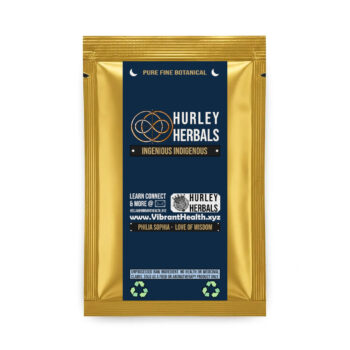
| Packed by | Seller Republic Limited (Vibrant Health XYZ), UK — general food business product or raw material |
| Packaging | Vacuum sealed, reusable |
Tea House method, as supplied: add 1–2 tablespoons of herbs to 1 litre of water in a stainless steel pan. Bring to a boil and simmer for 5–10 minutes according to taste preference. The colour will deepen as it steeps. The herbs may be reused 2–4 times over the following 2 days, with flavour varying between brews.
Start weaker than you think. Papaya leaf is the one herb in this range where we would suggest half the usual quantity on a first attempt — half a teaspoon per 250ml, 3 to 5 minutes — and building up from there. It is easy to make a cup you cannot finish.
1 teaspoon in 500ml of cold water, refrigerated overnight, then strained. Cold water pulls far less bitterness than hot, and for papaya leaf specifically this is the gentlest preparation there is.
Yes, though the fresh leaf rather than the dried. Young papaya leaves and shoots are cooked as a bitter vegetable across Southeast Asia and the Pacific — blanched, drained, squeezed out and stirred through with garlic, chilli and something salty, in the same way you would treat bitter greens anywhere.
Dried leaf does not rehydrate into a vegetable. Use this pack as an infusion, and use the water rather than the leaf if you want the bitterness in a dish — a strong brew makes a bitter base for a dressing or a braise.
| Fresh young leaf | Dried leaf (this) | |
|---|---|---|
| Main use | Cooked as a bitter vegetable | Infusion |
| Preparation | Blanch, drain, squeeze out, stir-fry | Steep or cold brew |
| Bitterness | Reduced by blanching and squeezing | Managed by dose, time and temperature |
| Texture | Soft green, eaten | Strained out, not eaten |
| Where you find it | Southeast Asia and the Pacific | Anywhere, all year |
| UK availability | Effectively none | This pack |
Dried leaf will not rehydrate into a vegetable. If a recipe calls for papaya leaves stir-fried with garlic and chilli, it means fresh ones. What dried leaf does instead is give you a controllable bitter liquid, which is a different and genuinely useful thing.
Bitterness is an ingredient, not a fault. Once you stop trying to make papaya leaf taste mild, it becomes useful.
Blending is the normal way to drink it.
Cut a papaya anywhere — leaf, petiole, green fruit, stem — and it bleeds a milky latex. That latex is the plant’s defence, and it is also a commercial crop in its own right: it is the source of papain, the enzyme used industrially as a meat tenderiser.
It is worth knowing about because it explains the handling. The latex is why green papaya is scored and drained before it is used as a vegetable, why leaves are usually blanched before cooking, and why the fresh plant is sticky to work with. Drying removes that problem entirely — there is no latex in a dried leaf.
Because it never builds anything to last. A tree invests years in woody tissue that carries it through decades; papaya skips that step entirely and spends everything on height and fruit.
The numbers are extraordinary for a plant that reaches 10 metres. It can flower within four to eight months of planting and fruit inside the first year. It then declines quickly and rarely lasts beyond about five years, at which point commercial growers replace it rather than nurse it.
That is the trade-off of being a giant herb rather than a tree, and it is the same strategy its close relative moringa follows — fast, soft-wooded, short-lived, replaced.
Ingredients: Papaya leaf (Carica papaya). Single ingredient. Nothing added.
Allergens: This product contains none of the 14 allergens that must be declared under UK law — celery, cereals containing gluten, crustaceans, eggs, fish, lupin, milk, molluscs, mustard, peanuts, sesame, soybeans, sulphur dioxide and sulphites, and tree nuts.
We publish this before you buy because we have to. Under Article 14 of assimilated Regulation (EU) 1169/2011, food sold at a distance must carry the same mandatory information as food bought in a shop, available free of charge before the purchase is concluded and again at delivery.
Nutrition declaration: Not required for this product. Annex V of assimilated Regulation (EU) 1169/2011 exempts all forms of tea and herbal infusions containing no added ingredients that would change nutritional value.
We value the rich heritage of herbal traditions that spans centuries. Our interest in herbs is informed by both historical practices and modern understanding of botanicals.
We source our ingredients from carefully selected suppliers who follow sustainable harvesting and cultivation practices. Our production methods are designed to preserve the natural qualities of our herbs through vacuum sealing and gentle processing techniques that maintain freshness and flavour integrity.
Our packaging is designed to be reused. Simply wash thoroughly after use.
Herb stocks are rotated annually to ensure freshness. Please note packaging may vary as we update our product range.
Store in a cool, dry place away from direct sunlight. Best before: see base of package. Keep it airtight. Papaya leaf is brittle when fully dry and will break down into dust if handled roughly — that dust is still usable, it just needs a finer strainer.
How bitter is papaya leaf?
Very. It is the most bitter product in this range. Start at half a teaspoon per 250ml with a 3-minute steep, and build from there.
Is papaya a tree?
Botanically no. It is classified as a giant herb because it never produces true woody tissue. The trunk is a single soft, hollow, unbranched stem.
Where is papaya originally from?
Tropical Central America, most likely southern Mexico. Spanish explorers took it to the Caribbean and Southeast Asia in the sixteenth century.
Why is the leaf so deeply lobed?
That is its natural form — palmately divided into seven to eleven lobes, each lobe further cut and toothed, on a hollow petiole up to a metre long.
How do I make it less bitter?
Shorter steep, cooler water, blend it with something mild, add citrus, or serve it cold. Cold brewing pulls far less bitterness than hot water.
Can I cook with dried papaya leaf?
Not as a vegetable — that use is for fresh young leaves. Use this as an infusion, or use a strong brew as a bitter base in a dressing or braise.
Does it contain allergens?
No. None of the 14 allergens that must be declared under UK law. Single ingredient, nothing added.
How long does it keep?
Each pack carries a best before date on the base, alongside the batch ID and picked date. Store cool, dry, dark and airtight.
Last updated: 8 September 2026.
Botanical data cross-checked against Missouri Botanical Garden, World Flora Online, Purdue University horticultural records and Britannica.
Raw ingredient. Packaging may vary. All herbs are marked with Batch ID, Picked Date and Best Before Date. No health claims made. Information on this website is for educational purposes only and is not intended as medical advice.
| Weight | 15 g |
|---|---|
| Dimensions | 15 × 2.5 × 22 cm |
| Colour | n/a |
| Herbal Extraction | n/a |
| Country of origin | Thailand |
| Ean | 680699850027 |
| Flavour | Aluminium Ziplock |
| Indigenous herbal use | Good Health |
| Indigenous stone use | n/a |
| Ingredients | Dried Papaya Leaves (Carica Papaya) |
| Metal | n/a |
| Semi precious stone | n/a |
| Tribe | n/a |
| Wild essential oil | n/a |
| Weight |
Only logged in customers who have purchased this product may leave a review.



There are no reviews yet.