RAW INGREDIENT
🛒 Buy 4 Save 20% – Mix & Match
Average UK Delivery Time: 1-3 Days
✈️ Free UK Delivery – Orders Over 25 GBP
📦 9.95 GBP Next Day Delivery (Orders before 12 noon)






Original price was: £9.99.£5.99Current price is: £5.99.
RAW INGREDIENT
🛒 Buy 4 Save 20% – Mix & Match
Average UK Delivery Time: 1-3 Days
✈️ Free UK Delivery – Orders Over 25 GBP
📦 9.95 GBP Next Day Delivery (Orders before 12 noon)
20 in stock
Tamarind powder is the dried, milled fruit pulp of Tamarindus indica — a souring agent, not a spice. It brings sharp acidity with a dried-fruit sweetness underneath, and it dissolves straight into liquid without the soaking, mashing and straining that a pulp block demands.
If you have made pad thai, sambar or Worcestershire sauce, you have used it. This is the same ingredient with the work already done.
A long-lived tropical evergreen tree in the Fabaceae family — the legume family, alongside peas, beans and peanuts. Tamarind is a bean, botanically speaking, and the pod gives it away.
The genus is monotypic: Tamarindus contains exactly one species, and this is it. There is no second tamarind.
Trees reach 20 to 24 metres with fine, ferny pinnate foliage and can stay productive for up to 200 years. The pods are 4 to 13cm long, usually curved, with a brittle shell holding one to ten seeds embedded in sticky brown pulp. That pulp is about 40% of the pod, and it is the only part used here.
African. This surprises almost everyone, because tamarind is so embedded in Indian cooking that it reads as indigenous — and the species name indica reinforces the mistake.
The tree is native to the dry savanna of tropical Africa. It was carried to the Indian subcontinent so long ago, and naturalised so completely, that early European botanists assumed India was home. India is now the largest producer in the world.
It grows well up to about 1,500 metres, tolerates a wide range of soils, and is commonly found at village edges, along field boundaries and beside roads throughout the tropics.
Tartaric acid, and an unusual amount of it. Tamarind pulp is the richest known natural source of tartaric acid, at somewhere between 8 and 18%.
That matters in the kitchen because tartaric acid tastes different from the acids in other souring agents. Lemon and lime lead with citric acid, which is bright and volatile and fades as it cooks. Vinegar is acetic, sharp and aromatic. Tartaric is rounder, deeper and heat-stable — it holds through a long simmer where lemon juice would disappear.
It is also why tamarind keeps. The acidity is high enough to act as its own preservative.
| Botanical name | Tamarindus indica |
| Family | Fabaceae (legumes) |
| Genus | Monotypic — one species only |
| Part used | Fruit pulp |
| Form | Dried, milled to powder |
| Origin | Thailand |
| Net weight | 50g |
| Principal acid | Tartaric |
| Flavour | Sharp sour, dried-fruit sweetness, date and molasses depth |
| Ingredients | Tamarind fruit pulp only. Nothing added. |
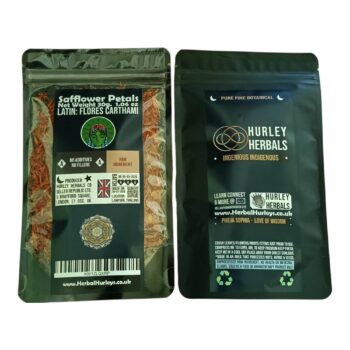
| On pack | Batch ID, picked date, best before date |
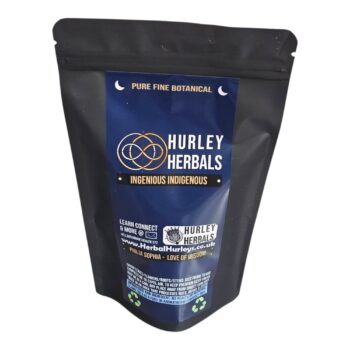
| Packed by | Seller Republic Limited (Vibrant Health XYZ), UK — general food business product or raw material |
| Packaging | Vacuum sealed, reusable |
Powder is the most convenient of the tamarind formats and the least forgiving of guesswork, because it goes in dry and you cannot taste it until it has dissolved. Add it in stages.
To make tamarind water — the form most recipes actually want — whisk 1 tablespoon of powder into 100ml of warm water and leave it 5 minutes. That gives you a working substitute for tamarind paste or for a soaked and strained pulp block, without the fibre and seeds.
Start with 1 to 2 teaspoons per litre, stirred in towards the end of cooking, then taste. Tamarind is easier to add than to remove, and the sourness reads stronger once the dish cools.
1 tablespoon of powder dissolved in 100ml of warm water, then balanced with palm sugar and fish sauce. This is the classic three-way balance, and tamarind is the sour leg of it.
Tamarind and date chutney starts here. Powder blends in directly with no straining, which is its main advantage over blocks.
The one job only the powder can do. Blitz with chilli, salt and sugar for a dry rub — a wet paste cannot be used this way.
For agua de tamarindo, whisk 2 teaspoons per 250ml of water with sugar to taste, then chill and strain if needed. It also makes a serious sour mixer in place of lime.
Mixed with chilli powder and sugar it becomes the coating on Mexican tamarind sweets and the rim for a michelada.
| Form | Preparation | Best for |
|---|---|---|
| Powder | Whisk into warm water, or add dry | Rubs, drinks, quick sauces, anything dry |
| Paste | Spoon straight in | Convenience, but often diluted or salted |
| Pulp block | Soak, mash, strain out fibre and seeds | Traditional depth, at the cost of ten minutes |
| Whole pods | Crack, peel, de-seed, de-fibre | Snacking, or making paste from scratch |
| Concentrate | Use sparingly, much stronger | Industrial and commercial kitchens |
As a rough working conversion, 1 tablespoon of powder in 100ml of warm water stands in for around 1 tablespoon of tamarind paste. Brands vary in strength, so taste before committing.
Three practical reasons, all of them coming back to tartaric acid.
It survives heat. Citric acid in lemon and lime is volatile and fades through a long cook, which is why a curry soured with lemon at the start tastes flat by the end. Tartaric acid holds. Add tamarind early and it is still there an hour later.
It brings sweetness with the sourness. Tamarind pulp carries substantial natural sugar alongside its acid, so you get sour and sweet in one addition. Lemon gives you acid alone, and you have to put the sweetness back yourself.
It preserves itself. The acidity is high enough that tamarind pulp resists spoiling — it is often observed that although it looks moist, it should not go mouldy. That is why tamarind blocks sit in cupboards for years and why the powder is stable.
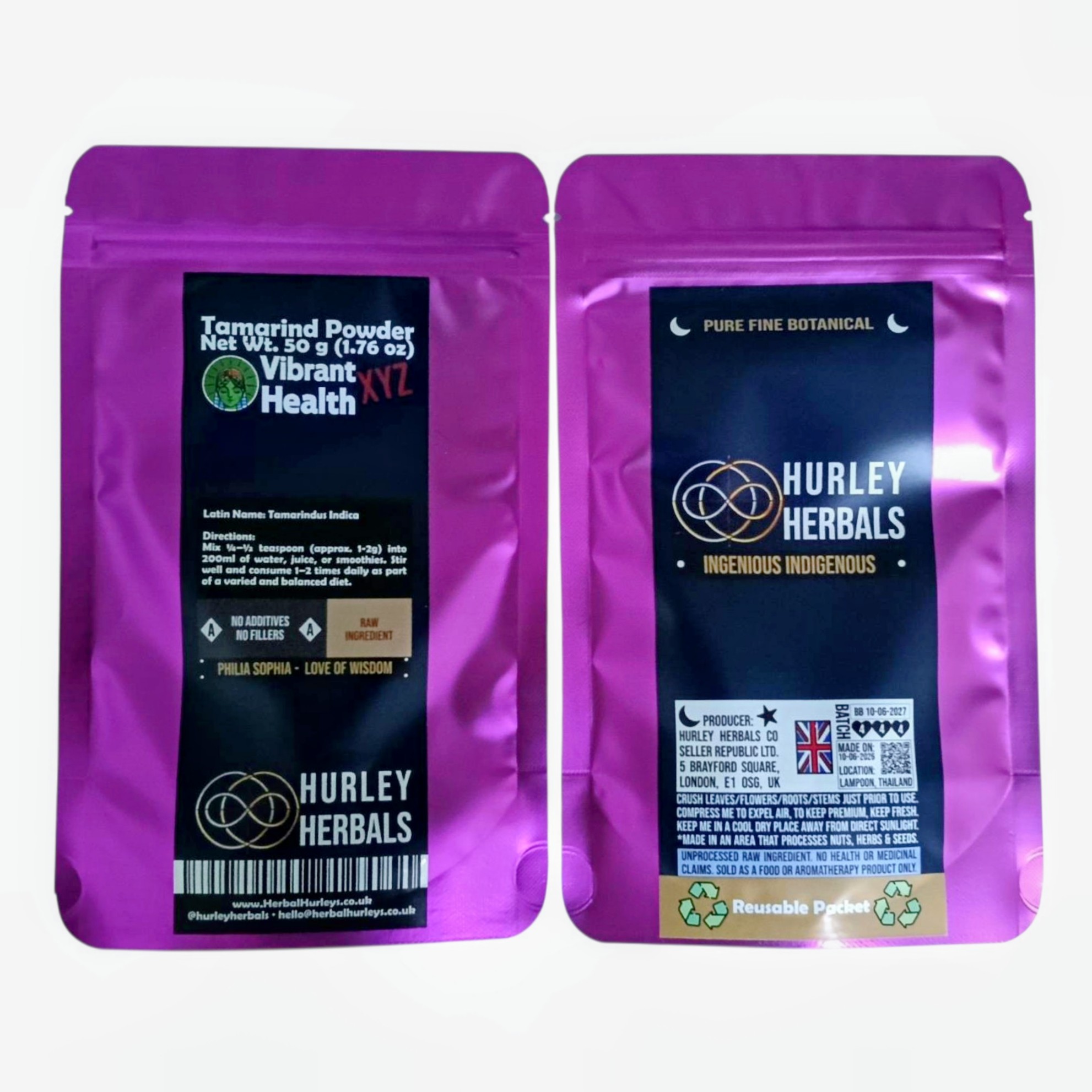
Ingredients: Tamarind fruit pulp (Tamarindus indica). Single ingredient. Nothing added.
Allergens: This product contains none of the 14 allergens that must be declared under UK law — celery, cereals containing gluten, crustaceans, eggs, fish, lupin, milk, molluscs, mustard, peanuts, sesame, soybeans, sulphur dioxide and sulphites, and tree nuts.
Tamarind is a legume, in the same botanical family as peanuts and soy. It is not one of the regulated allergens and is not treated as one under UK law, but we state the relationship rather than leave you to work it out.
We publish this before you buy because we have to. Under Article 14 of assimilated Regulation (EU) 1169/2011, food sold at a distance must carry the same mandatory information as food bought in a shop, available free of charge before the purchase is concluded and again at delivery.
Nutrition declaration: Not required for this product. Annex V of assimilated Regulation (EU) 1169/2011 exempts herbs, spices and flavourings, and unprocessed single-ingredient products.
We value the rich heritage of herbal traditions that spans centuries. Our interest in herbs is informed by both historical practices and modern understanding of botanicals.
We source our ingredients from carefully selected suppliers who follow sustainable harvesting and cultivation practices. Our production methods are designed to preserve the natural qualities of our herbs through vacuum sealing and gentle processing techniques that maintain freshness and flavour integrity.
Our packaging is designed to be reused. Simply wash thoroughly after use.
Herb stocks are rotated annually to ensure freshness. Please note packaging may vary as we update our product range.
Store in a cool, dry place away from direct sunlight. Best before: see base of package. Airtight matters more with a powder than with a leaf — tamarind powder is hygroscopic and will clump if it picks up moisture. Clumped powder is still perfectly usable; break it up and whisk it into warm water rather than adding it dry.
How much tamarind powder replaces tamarind paste?
Roughly 1 tablespoon of powder whisked into 100ml of warm water for 1 tablespoon of paste. Brands vary in strength, so taste before committing.
Do I need to soak and strain it?
No. That is the advantage of powder. Whisk it into warm water for 5 minutes, or add it dry to a wet dish. No fibre, no seeds, no sieve.
Is tamarind Indian?
No. It is native to the dry savanna of tropical Africa. It was carried to India so long ago that early botanists assumed it was Indian, and named it indica. India is now the world’s largest producer.
Why is tamarind so sour?
Tartaric acid. Tamarind pulp is the richest known natural source of it, at 8 to 18%. Tartaric is rounder and more heat-stable than the citric acid in lemons, so it holds through a long simmer.
Can I use it in a dry rub?
Yes, and this is the one job only the powder can do. Blitz with chilli, salt and sugar. A paste or a pulp block cannot be used dry.
Is tamarind a fruit or a legume?
Both. It is the pulp inside a pod, and the tree belongs to the legume family. Botanically the pod is a bean.
Does it contain allergens?
No. None of the 14 allergens that must be declared under UK law. It is a legume, in the same family as peanuts and soy, though it is not itself a regulated allergen.
Why has my powder gone lumpy?
It has picked up moisture. Tamarind powder is hygroscopic. Break the lumps up and whisk into warm water — nothing is lost.
Last updated: 8 September 2026.
Botanical and compositional data cross-checked against the Encyclopedia of Life, published food-science literature on tamarind pulp and horticultural records.
Raw ingredient. Packaging may vary. All herbs are marked with Batch ID, Picked Date and Best Before Date. No health claims made. Information on this website is for educational purposes only and is not intended as medical advice.
| Weight | 50 g |
|---|---|
| Dimensions | 12 × 20 × 2 cm |
| Colour | n/a |
| Herbal Extraction | n/a |
| Country of origin | Thailand |
| Ean | B0F24L71SN |
| Flavour | Tamarind Powder |
| Indigenous herbal use | Good Health |
| Indigenous stone use | n/a |
| Ingredients | Ground Dried Tamarind Fruit Pulp (Tamarindus Indica) |
| Metal | n/a |
| Semi precious stone | n/a |
| Tribe | n/a |
| Wild essential oil | n/a |
| Weight |
Only logged in customers who have purchased this product may leave a review.



There are no reviews yet.