PURE RAW FINE BOTANICAL
RAW INGREDIENT
🛒 Buy 4 Save 20% – Mix & Match
Average UK Delivery Time: 1-3 Days
✈️ Free UK Delivery – Orders Over 25 GBP
📦 9.95 GBP Next Day Delivery (Orders before 12 noon)


Original price was: £9.99.£5.99Current price is: £5.99.
RAW INGREDIENT
🛒 Buy 4 Save 20% – Mix & Match
Average UK Delivery Time: 1-3 Days
✈️ Free UK Delivery – Orders Over 25 GBP
📦 9.95 GBP Next Day Delivery (Orders before 12 noon)
Out of stock
Neem powder is the ground dried leaf of Azadirachta indica, and we supply it as a non-food raw botanical. It is a formulation and garden material, not an infusion and not a food ingredient.
That distinction is deliberate and it is the first thing on this page for a reason. Neem is one of the most useful plants on earth for what it does to insects, to soap and to dye. It is not something we sell to be eaten or drunk, and nothing on this page tells you how to.
A fast-growing evergreen tree in the Meliaceae family — the mahogany family. It is one of only two species in the genus Azadirachta, and it reaches 15 to 20 metres, occasionally to 30, with widely spreading branches.
The leaves are odd-pinnately compound, carrying 9 to 19 narrowly ovate leaflets on each leaf, and they are the part milled into this powder. The flowers are small and white, about 1cm across, fragrant when fresh, held in panicles from the leaf axils. The fruit is an ovoid yellow drupe with thin pulp and a single seed.
Neem wood is dense at around 0.75 g/cm³, naturally durable and termite-resistant, which is why the same tree supplies timber, tool handles and furniture across its range.
Native to the Indian subcontinent — India, Nepal, Pakistan, Bangladesh, Sri Lanka and the Maldives — and particularly associated with the arid regions of India and Burma. It has since been introduced across arid tropical Africa, Asia and the Americas.
It is extremely drought tolerant, and it is planted deliberately as a pioneer species on exhausted soil where little else will establish. A neem tree is often the first thing put into ground that has been farmed out.
The compound the whole plant is known for. Azadirachtin is one of the most potent insect antifeedants known — it repels insects, stops them feeding, and disrupts their growth and reproduction rather than killing on contact.
Every part of the tree produces it. Concentrations are highest in the seed kernels, which is where commercial neem oil comes from, but it is present in the leaves too, and that is why dried neem leaf has its traditional uses.
Its commercial standing is formal rather than folkloric. The US EPA registers neem-based biopesticides, and ISO 16991:2003 sets a quality standard for neem seed oil intended for pesticide use, with a minimum azadirachtin content of 10%.
Three well-documented things, none of them culinary.
Dried neem leaves are used to retard insect damage in stored grain — layered with the grain, they deter the beetles and weevils that would otherwise get into it. This is a long-standing practice across South Asia and it is the leaf’s most widespread traditional use.
Neem leaf infusion yields a brown natural colorant for wool and silk. It is a dyer’s material, and the powder disperses more readily in a dye bath than whole leaf does.
Neem goes into soaps, toothpastes and lotions across its native range. Most commercial products use the seed oil, but ground leaf is used in formulation as well, particularly in soap-making where the powder contributes colour and texture.
As a dry botanical input, dispersed rather than dissolved. It does not go into solution — it suspends, settles and needs agitating.
Because it establishes where other trees will not. Neem is a pioneer reclamation species — fast-growing, extremely drought tolerant, and able to hold on in exhausted or degraded soil that has been farmed until it stopped producing.
Once established it does several jobs at once. It provides shade in places with none, acts as a windbreak, supplies firewood and charcoal, and its seed cake returns to the soil as a fertiliser after the oil has been pressed out. In East Africa a single neem tree is used for firewood, timber, poles, utensils, fodder, bee forage, shade and soil improvement.
That combination — grows anywhere, useful in every part — is why it spread out of India and across the arid tropics in the twentieth century.
| Dried leaf powder (this) | Seed oil | |
|---|---|---|
| Part of the tree | Leaf | Seed kernel |
| Azadirachtin level | Present, lower | Highest concentration; commercial standard is ≥10% |
| Form | Dry powder, disperses | Oil, emulsifies |
| Typical use | Grain storage, dye, soap-making | Biopesticide sprays, soap, cosmetics, lubricant |
| Regulated as | Raw botanical material | ISO 16991:2003 for pesticide-grade oil |
| Smell | Green, dry, bitter | Strongly sulphurous, garlic-like |
If you are looking for the sprayable insect product, that is the oil rather than this. What the leaf powder gives you is a dry botanical for formulation.
The bitter, green, faintly sulphurous character is the limonoids — azadirachtin among them, along with nimbolides and meliantriol. Those same compounds are what make neem wood decay-resistant and what make the tree unappealing to almost everything that eats plants.
The powder is markedly less pungent than the oil. Neem oil is notoriously strong; dried leaf is dry and bitter rather than overpowering.
Leaf powder rather than a cut, milled fine enough to disperse in a liquid and to blend evenly into a soap batter at trace. That is the practical difference between powder and dried leaf for formulation: a cut leaf has to be steeped and strained, a powder goes straight in.
For dye work the powder is the easier form because there is more surface area in contact with the bath and the colour comes out faster. For grain storage the whole dried leaf is traditional, since the point there is physical layering rather than extraction.
Azadirachtin degrades with light, heat and time — this is well known in the biopesticide trade, where formulated products carry stabilisers for exactly that reason. A raw powder has none.
What that means in practice: store it dark, keep it sealed, and use it within the best before date rather than treating it as indefinitely shelf-stable. A powder that has faded from green-brown to dull khaki has been sitting in daylight.
| Botanical name | Azadirachta indica |
| Also known as | Neem, nimtree, Indian lilac, margosa |
| Family | Meliaceae (mahogany family) |
| Part used | Leaf |
| Form | Dried, ground to powder |
| Origin | Thailand |
| Net weight | 50g |
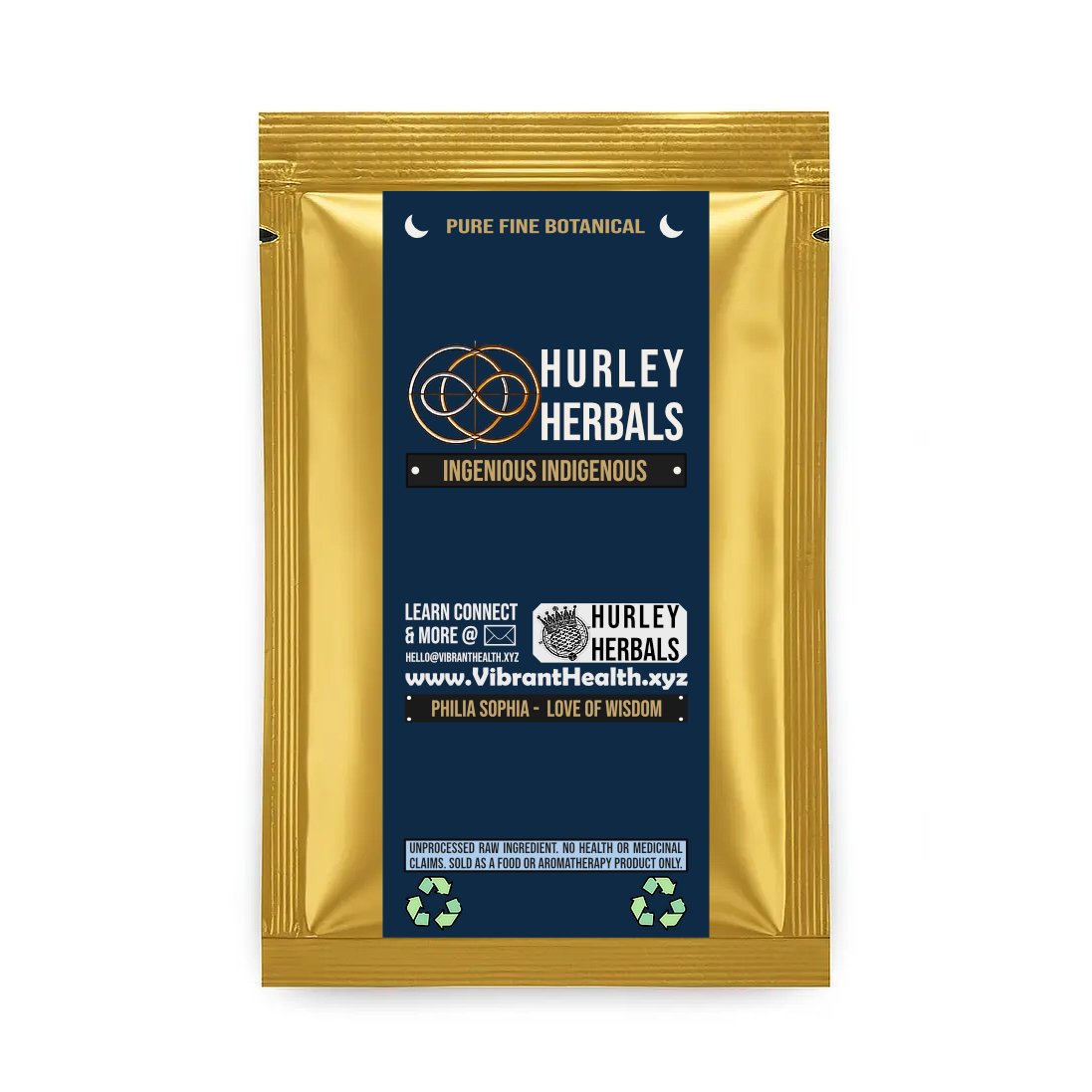
| Ingredients | Ground dried neem leaves. Nothing added. |
| Supplied as | Non-food raw material |
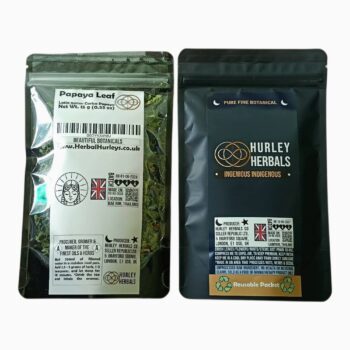
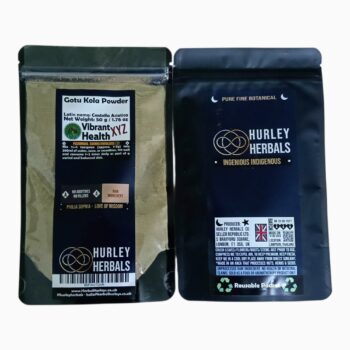
| On pack | Batch ID, picked date, best before date |
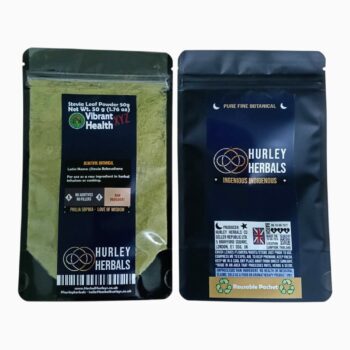
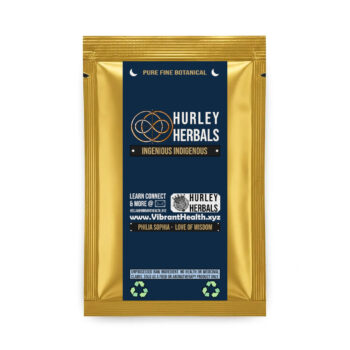
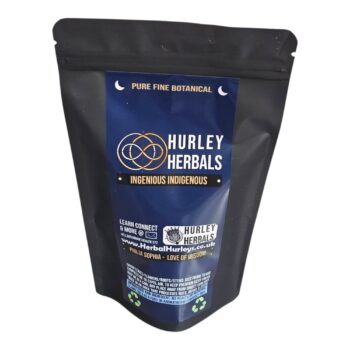
| Packaging | Vacuum sealed, reusable |
Because of the flowers. Neem carries small white fragrant blooms in loose panicles that look superficially like lilac, and European botanists working in India named on appearance. It is not related — true lilac is Syringa, in the olive family, while neem sits in Meliaceae with mahogany and Spanish cedar.
Its other common name, margosa, comes through Portuguese from amargosa, meaning bitter. That one is accurate.
The genus name is worth a line too. Azadirachta comes from the Persian azad dirakht, the free tree — a tree that grows without being tended.
This is a non-food raw botanical. It is not supplied for consumption, and no preparation instructions for consumption appear on this page.
It is sold as a raw material for garden, craft, dye and formulation use. If you are formulating anything that goes onto skin, patch test as you would with any botanical powder, and follow the normal practice for the product type you are making.
Because this is not a food, no allergen declaration or nutrition information is provided. Those requirements apply to food, and this product is not one.
We value the rich heritage of herbal traditions that spans centuries. Our interest in herbs is informed by both historical practices and modern understanding of botanicals.
We source our ingredients from carefully selected suppliers who follow sustainable harvesting and cultivation practices. Our production methods are designed to preserve the natural qualities of our herbs through vacuum sealing and gentle processing techniques.
Our packaging is designed to be reused. Simply wash thoroughly after use.
Please note packaging may vary as we update our product range.
Store in a cool, dry place away from direct sunlight. Best before: see base of package. Keep it airtight — like any fine botanical powder it is hygroscopic and will clump if it takes on moisture. Clumped powder still disperses; break it up first.
Can I drink neem tea with this?
No. This product is supplied as a non-food raw material and we give no preparation instructions for consumption.
What is it for, then?
Garden preparations applied to plants, natural dyeing of wool and silk, soap and cosmetic formulation, and the traditional practice of layering dried leaf with stored grain to deter insects.
What is azadirachtin?
The compound neem is known for. It is one of the most potent insect antifeedants known, repelling insects and disrupting their growth and reproduction rather than killing on contact. Every part of the tree produces it.
Is this the same as neem oil?
No. Neem oil is pressed from the seed kernels and carries far more azadirachtin — commercial pesticide-grade oil is specified at 10% minimum under ISO 16991:2003. This is ground leaf.
Where does neem grow?
Native to the Indian subcontinent and the arid regions of India and Burma, now planted across arid tropical Africa, Asia and the Americas. It is extremely drought tolerant and is used as a pioneer species on exhausted soil.
Why is there no allergen or nutrition information?
Because those requirements apply to food. This product is supplied as a non-food raw material.
Does it dissolve?
No. It disperses and then settles, like any leaf powder. Agitate whatever you put it in.
Last updated: 8 September 2026.
Botanical and compositional data cross-checked against the National Tropical Botanical Garden, NParks Singapore Flora&FaunaWeb, ECHO Community agroforestry records and published neem literature.
Non-food raw material. Packaging may vary. No health claims made. Information on this website is for educational purposes only and is not intended as medical advice.
| Weight | 50 g |
|---|---|
| Dimensions | 12 × 20 × 2 cm |
| Colour | n/a |
| Herbal Extraction | n/a |
| Country of origin | Thailand |
| Ean | B0F24CGXLF |
| Flavour | Neem Powder |
| Indigenous herbal use | Good Health |
| Indigenous stone use | n/a |
| Ingredients | Ground Dried Neem Leaves (Azadirachta Indica) |
| Metal | n/a |
| Semi precious stone | n/a |
| Tribe | n/a |
| Wild essential oil | n/a |
| Weight |
Only logged in customers who have purchased this product may leave a review.


There are no reviews yet.