PURE RAW FINE BOTANICAL
RAW INGREDIENT
🛒 Buy 4 Save 20% – Mix & Match
Average UK Delivery Time: 1-3 Days
✈️ Free UK Delivery – Orders Over 25 GBP
📦 9.95 GBP Next Day Delivery (Orders before 12 noon)







Original price was: £9.99.£6.34Current price is: £6.34.
RAW INGREDIENT
🛒 Buy 4 Save 20% – Mix & Match
Average UK Delivery Time: 1-3 Days
✈️ Free UK Delivery – Orders Over 25 GBP
📦 9.95 GBP Next Day Delivery (Orders before 12 noon)
125 in stock
Damiana is the dried leaf of Turnera diffusa, a small aromatic shrub from southern Texas, Mexico and the Caribbean. Serrated leaves with a strong spice-like scent, closer to chamomile than to anything green.
Supplied as a raw botanical — dried leaf, cleaned and graded, nothing added.
A small, much-branched woody shrub reaching 1 to 2 metres, evergreen in its native range, with slender twiggy stems that put out new growth after seasonal rain.
The leaves are the part used: alternate, serrated along the margin, and aromatic. Small five-petalled yellow flowers open from early to late summer, followed by a small capsule with a sweet, fig-like scent.
The aroma comes partly from trichomes — fine hairs on the leaves and young stems — which is why the scent survives drying so well and why crushing a dried leaf releases more than looking at it suggests.
Yes, and it surprises most people. Damiana sits in the Passifloraceae — the passion flower family — in the subfamily Turneroideae.
It was formerly placed in its own family, Turneraceae, and a good deal of older literature still says so. The transfer into Passifloraceae reflects molecular phylogenetics and is now broadly adopted across major herbaria and floras. Both family names appear in trade material, and both refer to the same plant.
If you also stock passion flower, the two are relatives — a Mediterranean-looking climber and a desert shrub in the same family.
Because it was the accepted name for a long time and it stuck in the trade. Turnera aphrodisiaca is a synonym; Turnera diffusa is the currently accepted binomial.
The two are generally regarded as the same plant in herbal commerce, and material labelled either way is usually the same species. The old name simply describes a nineteenth-century reputation rather than the botany, which is one reason it fell out of formal use.
A different species that gets sold under the same name. Turnera ulmifolia — yellow alder — is a close relative, similar in appearance, widely grown as an ornamental across the tropics, and chemically different.
The substitution is documented well enough that a peer-reviewed paper exists specifically on telling them apart, using fluorescence, scanning electron microscopy, HPTLC and UPLC. Wikipedia notes the misidentification happens mostly in horticultural sales rather than in herbal markets, which is reassuring but not a guarantee.
The practical protection is the same as everywhere else in this catalogue: buy on the binomial. Anything sold as damiana without Turnera diffusa attached could be ulmifolia.
| Turnera diffusa (this) | Turnera ulmifolia | |
|---|---|---|
| Common name | Damiana | Yellow alder, false damiana |
| Height | 1–2m | 0.5–1.5m |
| Leaves | Serrate, strongly aromatic | Elliptic to lanceolate, serrated, slightly rough |
| Grown as | A herbal crop | An ornamental |
| Chemistry | Different. This is the reason the distinction matters. | |
Native to southern Texas and the Lower Rio Grande region, through northern and central Mexico, into Central America, the Caribbean and parts of South America.
It is a plant of dry, warm, open ground rather than forest. The twiggy habit and the seasonal flush of new growth after rain are both adaptations to that — it does its growing when water arrives and waits the rest of the year.
Spice-like, and the comparison made most often is chamomile rather than anything you would expect from a shrub leaf. It is warm and slightly sweet rather than green or grassy.
That aroma is the simplest quality check available. Damiana that smells faintly of nothing has either been stored badly, dried too hot, or is not damiana.
| Check | Good | Poor |
|---|---|---|
| Smell on crushing | Strong, warm, chamomile-like | Faint, flat, dusty |
| Leaf | Serrated margin visible | Uniform fragments, no margin |
| Stem content | Minimal — leaf is the part used | Woody twig throughout |
| Colour | Green to olive-green | Brown or grey — over-dried or old |
| Consistency | One material throughout | Mixed leaf shapes — possible blending |
Stem is the specific thing to watch. Damiana is a twiggy shrub and stem is easy to include, but the leaf is the part harvested and the aromatic trichomes are on leaf and young stem only. Woody twig is weight without aroma.
For the habit rather than the use. Damiana grows as a dense mass of slender twiggy stems radiating from the base, and a cut branch looks like a besom — a bundle of twigs bound at one end.
Its Spanish common name oreganillo, little oregano, refers to the aroma instead. Both names describe the plant accurately, which is more than can be said for aphrodisiaca.
During flowering, which is the traditional timing across its range and is documented in the herbal trade literature. Flowering runs from early to late summer.
The reasoning behind harvesting at flowering is straightforward for an aromatic shrub: volatile terpenoid content in leaves generally peaks around flowering, and it is also the point at which the plant is unmistakably identifiable in the field — five-petalled yellow flowers, serrate leaves, twiggy habit.
For a plant with a documented look-alike, being harvested when the flowers are open is a quiet advantage. A collector working a stand in flower is far less likely to gather ulmifolia by mistake.
| Botanical name | Turnera diffusa |
| Synonym | Turnera aphrodisiaca — no longer accepted |
| Also known as | Damiana, Mexican damiana, oreganillo, old woman’s broom |
| Family | Passifloraceae, subfamily Turneroideae — formerly Turneraceae |
| Order | Malpighiales |
| Part used | Leaf |
| Form | Loose dried leaf |
| Native range | Southern Texas, Mexico, Central America, Caribbean, South America |
| Aroma | Warm, spice-like, chamomile-adjacent |
| Net weight | 15g |
| Ingredients | Damiana leaf. Nothing added. |
| Supplied as | Raw botanical material |
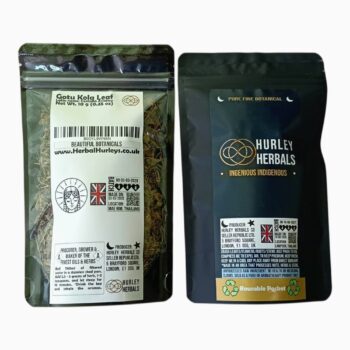
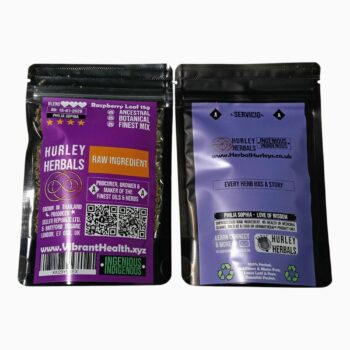
| On pack | Batch ID, picked date, best before date |
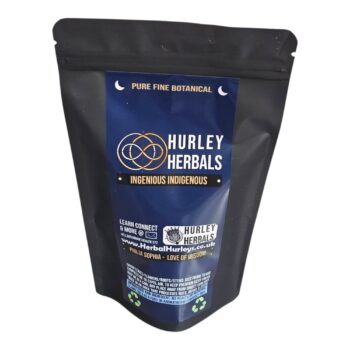
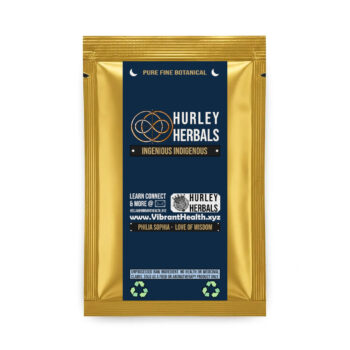
| Packaging | Vacuum sealed, reusable |
A complex mixture, and the genus has been studied in some detail. Across Turnera, researchers have identified 22 flavonoids — including apigenin and acacetin — along with maltol glucoside, phenolics, seven cyanogenic glycosides, monoterpenoids, sesquiterpenoids, triterpenoids, the polyterpene ficaprenol-11, fatty acids and caffeine.
The terpenoids are what you smell. Flavonoids are colourless and contribute nothing to aroma; the warm spice character comes from the volatile terpenoid fraction held in the trichomes, which is why the scent is strongest when the leaf is crushed rather than intact.
We list this as composition, not as a claim. It describes what the plant contains and nothing further.
Because of where it is stored. Many aromatic plants hold their volatile oils inside the leaf tissue, in glands that have to be broken to release anything. Damiana holds a good deal of its aromatic fraction in trichomes — fine hairs on the leaf surface and young stems.
Surface structures dry without collapsing in the way internal tissue does, so the aroma is still there and still accessible in dried material. It is also why crushing a dried leaf between the fingers releases noticeably more scent than the intact leaf gives off.
The trade-off is that surface-held aromatics are easier to lose to air. Damiana wants a properly airtight container more than a thick waxy leaf does.
There is a practical consequence for buying, too. Because the aroma sits on the surface rather than locked inside, a supplier cannot hide poor material behind an intact leaf. Crush a sample and the answer is immediate, which makes damiana one of the easier botanicals to judge without laboratory work.
Recorded rather than recommended.
Damiana is documented in Mexican tradition, and its best-known commercial appearance is in Mexican liqueurs — it is a traditional ingredient in a damiana liqueur used in margaritas in Baja California.
It appeared in nineteenth-century patent medicines under the old name Turnera aphrodisiaca, which is where that binomial comes from. Modern botany dropped the name.
That is the documented record. We make no claims arising from it.
Because damiana leaf is light and bulky. A dried shrub leaf occupies far more volume per gram than a root or a powder, so 15g of damiana looks like considerably more material than 15g of pygeum or tamarind.
If you use it regularly, the 25g pack is the same material in a larger quantity rather than a different grade.
This is a raw botanical. It is supplied as loose dried leaf, and no preparation instructions are given on this page.
Because it is not supplied as a food, no allergen declaration or nutrition information is provided — those requirements attach to food, and this is raw material.
Cool, dry, dark and airtight. Best before: see base of package. The aromatic fraction is volatile and held in surface trichomes, so damiana loses scent faster than a thick or waxy leaf. An airtight container matters more here than for most. Crush a pinch before use — if there is no warm spice smell, the aroma has gone.
Is damiana related to passion flower?
Yes. It is in the Passifloraceae, subfamily Turneroideae. It was formerly placed in its own family, Turneraceae, and older sources still say so.
Why do some labels say Turnera aphrodisiaca?
It is a synonym that persisted in trade. Turnera diffusa is the currently accepted binomial. Both generally refer to the same plant in herbal commerce.
What is false damiana?
Turnera ulmifolia, yellow alder — a close relative, similar in appearance, chemically different, and grown mostly as an ornamental. A peer-reviewed paper exists on distinguishing the two. Buy on the binomial.
What does it smell like?
Warm and spice-like, most often compared to chamomile rather than to anything green. The scent comes from volatile terpenoids held in surface trichomes.
Where does it grow?
Southern Texas and the Lower Rio Grande region, through northern and central Mexico into Central America, the Caribbean and South America, on dry warm open ground.
How do I judge the grade?
Smell first — strong and warm is right, faint is not. Then look for a visible serrated leaf margin, minimal woody stem, and green rather than brown colour.
What is the difference between the 15g and 25g packs?
Quantity only. Same material, same grade.
Why is there no allergen or nutrition information?
Because those requirements attach to food. This product is supplied as raw botanical material.
We value the rich heritage of herbal traditions that spans centuries. Our interest in herbs is informed by both historical practices and modern understanding of botanicals.
We source our ingredients from carefully selected suppliers who follow sustainable harvesting and cultivation practices. Our production methods are designed to preserve the natural qualities of our botanicals through vacuum sealing and gentle processing techniques.
Our packaging is designed to be reused. Simply wash thoroughly after use.
Stocks are rotated annually. Please note packaging may vary as we update our product range.
Last updated: 8 September 2026.
Botanical data cross-checked against iNaturalist, the Lady Bird Johnson Wildflower Center, published Turnera phytochemistry reviews and Passifloraceae phylogenetic literature.
Raw botanical material. Packaging may vary. No health claims made. Information on this website is for educational purposes only and is not intended as medical advice.
| Weight | 15 g |
|---|---|
| Dimensions | 10 × 18 × 2 cm |
| Colour | n/a |
| Herbal Extraction | n/a |
| Country of origin | Thailand |
| Ean | (See packet) |
| Flavour | Blend Damiana |
| Indigenous herbal use | Good Health |
| Indigenous stone use | n/a |
| Ingredients | n/a |
| Metal | n/a |
| Semi precious stone | n/a |
| Tribe | n/a |
| Wild essential oil | n/a |
Only logged in customers who have purchased this product may leave a review.



There are no reviews yet.